
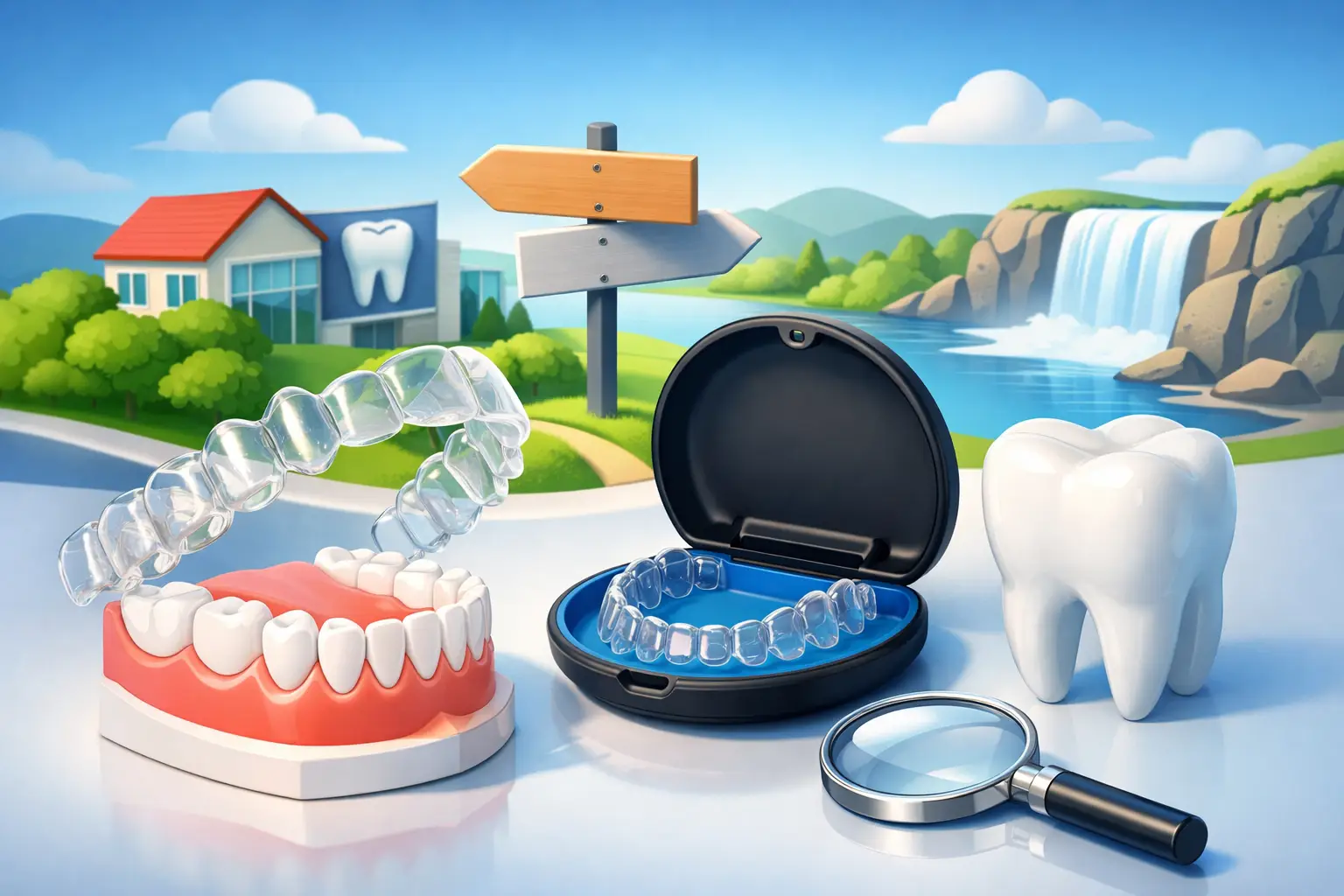

A crowded photo, a work presentation, or a conversation with your child can make you more aware of a smile you have learned to hide. For many adults and teens, Invisalign Beamsville Ontario treatment offers a discreet way to straighten teeth without the appearance of traditional braces. The right choice, however, depends on more than whether you prefer clear aligners.
A complete dental examination helps determine whether Invisalign can safely and effectively address your goals. At Kingsway Family Dentistry, treatment planning begins with listening to what you would like to change, assessing your bite and oral health, and explaining the options in clear terms. Some smiles are well suited to clear aligners. Others may benefit from braces, restorative treatment first, or a different approach altogether.
How Invisalign Works
Invisalign treatment uses a series of custom, removable clear aligners that apply gentle, planned pressure to move teeth gradually. Each set is designed to bring your teeth closer to their intended position. You wear an aligner for most of the day, remove it for meals and brushing, and move to the next set according to the schedule provided by your dental team.
Your treatment starts with diagnostic records, which may include digital X-rays, photographs, and digital impressions or scans. These records allow the dentist to evaluate tooth position, jaw alignment, gum health, and the way your upper and lower teeth meet. They also help create a personalized treatment plan rather than relying on a one-size-fits-all estimate.
Small tooth-colored attachments are often placed on selected teeth during Invisalign treatment. These attachments are designed to give aligners a better grip so they can create more precise movement. Some patients also need minor space adjustments between teeth. Both are common parts of orthodontic planning and should be discussed before treatment begins.
Who May Be a Good Candidate for Invisalign in Beamsville, Ontario?
Clear aligners can be an effective option for many teens and adults with mild to moderate crowding, spacing, rotated teeth, or certain bite concerns. They may also be appropriate for people whose teeth have shifted after earlier orthodontic treatment. The fact that aligners are removable is especially appealing for patients who want to continue enjoying their usual foods and maintain their regular brushing and flossing routine.
That said, removable treatment requires consistency. Aligners generally need to be worn about 20 to 22 hours each day to work as intended. Taking them out frequently, forgetting to put them back after meals, or changing aligners without guidance can slow progress and affect results. For someone who knows they may struggle with that routine, fixed braces can sometimes be the more dependable option.
Healthy teeth and gums are another key part of candidacy. Active gum disease, untreated cavities, infections, or damaged teeth should be addressed before orthodontic movement begins. Moving teeth through unhealthy supporting tissues can create unnecessary risk. A comprehensive examination allows your dentist to protect your long-term oral health while planning cosmetic improvements.
More complex bite problems, significant jaw discrepancies, severely rotated teeth, or teeth that need substantial movement may require braces, specialist care, or a combined treatment plan. This is not a setback. It is simply a reason to choose the approach that gives you the safest and most predictable result.
What Treatment Looks Like Day to Day
One of the practical benefits of Invisalign is that it fits into many busy routines. You can remove aligners before eating, drinking anything other than water, brushing, and flossing. There are no brackets or wires to clean around, and you do not need to avoid foods such as popcorn, apples, or crunchy vegetables in the same way you would with traditional braces.
The trade-off is responsibility. Aligners should be removed carefully and stored in their case, not wrapped in a napkin or placed in a pocket. They should be cleaned regularly with a soft toothbrush and lukewarm water or an approved cleaning method. Hot water can warp the plastic, while sugary drinks and coffee can stain aligners or leave sugar against your teeth.
Appointments are scheduled periodically so your progress can be monitored and your plan can be adjusted if needed. These visits matter even when treatment seems straightforward. Your dentist can check how your teeth are tracking, confirm that your bite is developing properly, and identify concerns before they become larger issues.
Some tenderness is normal when starting a new set of aligners because the teeth are being asked to move. This feeling is usually temporary and often described as pressure rather than pain. If an aligner feels sharp, does not fit properly, or causes significant discomfort, contact your dental office instead of trying to alter it yourself.
Invisalign Treatment Is About More Than Straight Teeth
A straighter smile can make cleaning easier by reducing areas where plaque and food collect. When teeth are crowded or overlapping, it can be harder to reach every surface with a toothbrush and floss. Better alignment may support daily hygiene, but it does not replace professional cleanings, routine examinations, or consistent home care.
Your bite also deserves attention. Teeth that meet unevenly can sometimes contribute to chipping, unusual wear, or strain on certain teeth. Orthodontic treatment may help improve how teeth fit together, but every bite is different. A dentist should evaluate factors such as enamel wear, existing crowns or fillings, missing teeth, gum health, and jaw symptoms before recommending any orthodontic option.
For patients considering whitening, bonding, veneers, crowns, or implants, the order of treatment is important. Straightening teeth first may create a better foundation for cosmetic or restorative work. In other cases, a damaged tooth needs treatment before aligners begin. Coordinating care in one practice can make the plan easier to understand and help ensure each step supports the next.
Planning for Costs, Retainers, and Long-Term Results
The cost of Invisalign varies because every case has different clinical needs and treatment length. Your consultation should include a clear discussion of anticipated fees, payment options, and whether your dental insurance provides orthodontic coverage. If you have benefits, reviewing them before treatment can help you understand what portion may be covered and what out-of-pocket costs to expect.
It is also wise to plan for retainers from the beginning. Teeth naturally have a tendency to shift after orthodontic treatment, even years later. Retainers help hold your new tooth positions while the supporting tissues adapt. Wearing them as instructed is one of the most meaningful ways to protect the time, effort, and investment you put into your smile.
A retainer is not a sign that treatment failed. It is a normal, long-term part of maintaining orthodontic results. Your dentist can recommend the type of retainer and wear schedule that best fits your situation.
Questions to Ask at Your Consultation
A useful Invisalign consultation should leave you with a realistic picture of treatment, not just an attractive promise. Ask what concerns aligners can address in your case, how long treatment may take, how often you will need visits, and what happens if teeth do not track as expected. You can also ask whether attachments, enamel reshaping, or restorative work may be part of the plan.
If you feel anxious about dental treatment, say so early in the conversation. A gentle, patient-focused dental team can explain each step at a comfortable pace and help you feel more prepared for the records, attachments, and follow-up visits involved. Clear communication is especially valuable for teens and for adults who have postponed dental care for years.
For Beamsville patients and families in nearby Lincoln, Vineland, Grimsby, Smithville, and Stoney Creek, Invisalign can be a practical orthodontic option when it is supported by careful diagnosis and consistent wear. The most helpful next step is a personalized examination that looks at your smile, your oral health, and the routine you can realistically maintain. A treatment plan should feel manageable from the first aligner to the retainer that helps keep your smile where you want it.