
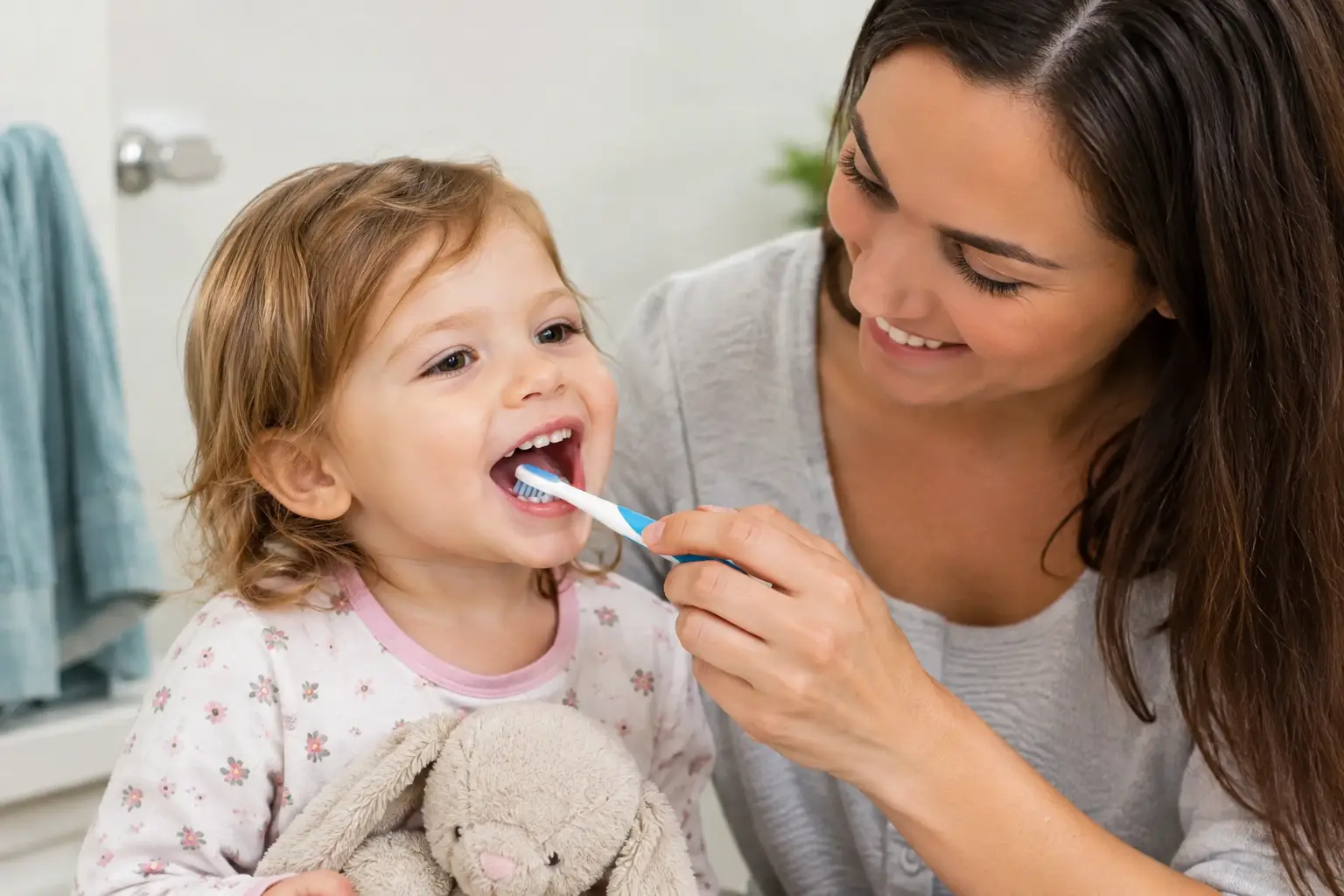

A toddler who clamps their mouth shut, grabs the toothbrush, or insists they can do it alone is not trying to make dental care difficult. They are being a toddler. The goal of learning how to brush toddler teeth is not perfection at every attempt. It is building a calm, consistent routine that removes plaque, protects developing teeth, and helps your child see brushing as a normal part of family life.
Baby teeth may be temporary, but they do serious work. They help children chew, speak clearly, and hold space for adult teeth. Cavities in baby teeth can still cause pain, infection, trouble eating, and missed preschool or daycare days. A few focused minutes twice a day can make a meaningful difference.
How to brush toddler teeth step by step
Choose a child-sized toothbrush with a small head and soft bristles. It should fit comfortably along the gumline and reach the back molars without poking the cheeks. Replace it every three months, or sooner if the bristles look flattened or frayed.
Use fluoride toothpaste in the right amount for your child’s age. For children younger than 3, use a smear about the size of a grain of rice. From ages 3 through 6, use a pea-sized amount. Fluoride strengthens enamel and helps prevent cavities, which is why the amount matters more than whether your child can rinse well.
Have your toddler sit on your lap, stand on a step stool at the sink, or lie back with their head supported against you. Many parents find that sitting behind the child provides the best view and the most gentle control. Brush in small circles along the front, back, and chewing surfaces of every tooth. Angle the bristles gently toward the gumline, where plaque tends to collect.
Aim for about two minutes, twice a day. In real life, some sessions will be shorter. If your child is upset, do what you can, stay calm, and try again later rather than turning every brushing session into a struggle. The bedtime brushing is especially valuable because food and drink residue can remain on teeth for hours overnight.
After brushing, encourage your child to spit out the toothpaste if they can. They do not need to rinse with water. Leaving a light layer of fluoride on the teeth offers added protection. If your toddler swallows a small amount of toothpaste used as directed, that is generally expected at this age. Keep the tube out of reach so they cannot eat toothpaste unsupervised.
Your toddler can help, but an adult should finish
Independence is a healthy part of toddlerhood, and letting your child participate can reduce resistance. Give them a turn first, then explain that it is your turn to check for “sugar bugs” or make sure every tooth is clean. A second toothbrush can help if they want to hold one while you brush with another.
Most children do not have the hand control to brush effectively on their own until around ages 6 to 8. Even a motivated toddler will miss areas, particularly the backs of the molars and the gumline. Think of their effort as practice and your final pass as the brushing that does the protective work.
Avoid using force whenever possible. Holding a child down may get the job done on a difficult night, but repeated struggles can make oral care feel frightening. If resistance is becoming intense or constant, mention it at your child’s dental appointment. A family dental team can check for sensitivity, erupting teeth, or other concerns and suggest techniques suited to your child.
Make brushing predictable, not negotiable
Toddlers respond well to routines because they know what comes next. Tie brushing to fixed parts of the day: after breakfast and before stories or bedtime. Keep the sequence the same – pajamas, toilet, brush teeth, book, bed – so brushing is not introduced as a last-minute demand.
A short song, a two-minute timer, or a favorite toothbrush can make the experience more cooperative. Let your child choose between two parent-approved toothbrush colors or decide whether they want to sit on your lap or stand at the sink. Small choices give them a sense of control without making the brushing itself optional.
Simple language helps, too. Rather than asking, “Do you want to brush your teeth?” try, “It is time to brush. Do you want the blue toothbrush or the green one?” Praise the behavior you want to see: opening wide, holding still, or letting you reach the back teeth. Keep the praise specific and immediate.
Screens can occasionally be useful during a particularly challenging phase, but they work best as a temporary support rather than the only way your child can tolerate brushing. The longer-term goal is a routine that feels familiar even when you are away from home or the battery is dead.
Pay extra attention to the back teeth and bedtime
Toddler molars have grooves that can hold food and plaque. They are also harder for children to reach, especially when new teeth are erupting and the area feels tender. Take a few extra seconds to brush the chewing surfaces of the back teeth thoroughly.
At bedtime, offer water after brushing if your child is thirsty. Milk, juice, sweetened drinks, and frequent snacks after brushing leave sugars on the teeth while saliva flow naturally slows during sleep. Even milk contains natural sugars, so it is best to make brushing the final food-and-drink step of the night, aside from water.
This does not mean every treat causes a cavity. Tooth decay develops from repeated exposure to sugars and plaque over time. The pattern matters. Frequent sipping, grazing, or going to sleep with anything other than water can be more challenging for teeth than enjoying a sweet item with a meal and brushing well afterward.
When should toddlers start flossing?
Start flossing once two teeth touch closely enough that a toothbrush cannot clean between them. This often happens around the molars, but every child’s mouth develops differently. Floss picks designed for children can make the task easier for parents, though regular floss works well too.
You do not need to make flossing a lengthy production. Gently guide the floss between the teeth, curve it against one tooth, then the other, and move to the next contact. Once each day is enough for most toddlers. Bedtime is usually the most practical time to add it.
Common brushing challenges and what can help
Teething can make brushing uncomfortable. Use a soft touch, keep the session brief, and try brushing at a different time if your child is especially sore. A cool, clean washcloth before brushing may be soothing for some children.
If your toddler dislikes the flavor of toothpaste, try a different child-safe fluoride flavor rather than switching to fluoride-free toothpaste without discussing it with a dental professional. Fluoride-free products may be appropriate in specific situations, but most children benefit from the cavity protection fluoride toothpaste provides.
Gagging is another common concern, especially when brushing the back teeth. Keep the brush head small, use less pressure, and avoid placing it too far back at once. Work gradually. If gagging is severe, occurs often outside of brushing, or makes oral care nearly impossible, bring it up with your child’s dentist.
Keep regular dental visits part of the routine
A child should have a first dental visit by their first birthday or within six months of the first tooth appearing. Early visits are not just for finding cavities. They help children become comfortable in the dental office, allow the dentist to monitor growth and eruption, and give parents a chance to ask practical questions about brushing, fluoride, habits, and nutrition.
Call a dental office promptly if your toddler has tooth pain, swelling, a broken tooth, a tooth that changes color after a fall, or a sore that does not heal. Children do not always have the words to explain discomfort, so changes in eating, sleep, or willingness to brush can also be useful clues.
At Kingsway Family Dentistry, families can count on clear guidance and gentle care as their child’s smile grows. On the hard nights, remember that consistency matters more than a picture-perfect two minutes. A patient, parent-led routine today gives your toddler a stronger foundation for comfortable dental visits and healthy habits for years to come.