

A missing tooth can change more than a smile. It can make chewing feel awkward, affect the way nearby teeth meet, and leave many people hesitant to laugh or speak freely. When considering a dental implant versus bridge, the best option is not automatically the newest treatment or the lowest initial cost. It is the option that fits your oral health, timeline, comfort level, and long-term goals.
Both implants and bridges are reliable ways to replace a missing tooth. Both can restore appearance and function. The key difference is how they are supported and how they affect the teeth and bone around the open space.
Dental Implant Versus Bridge: The Main Difference
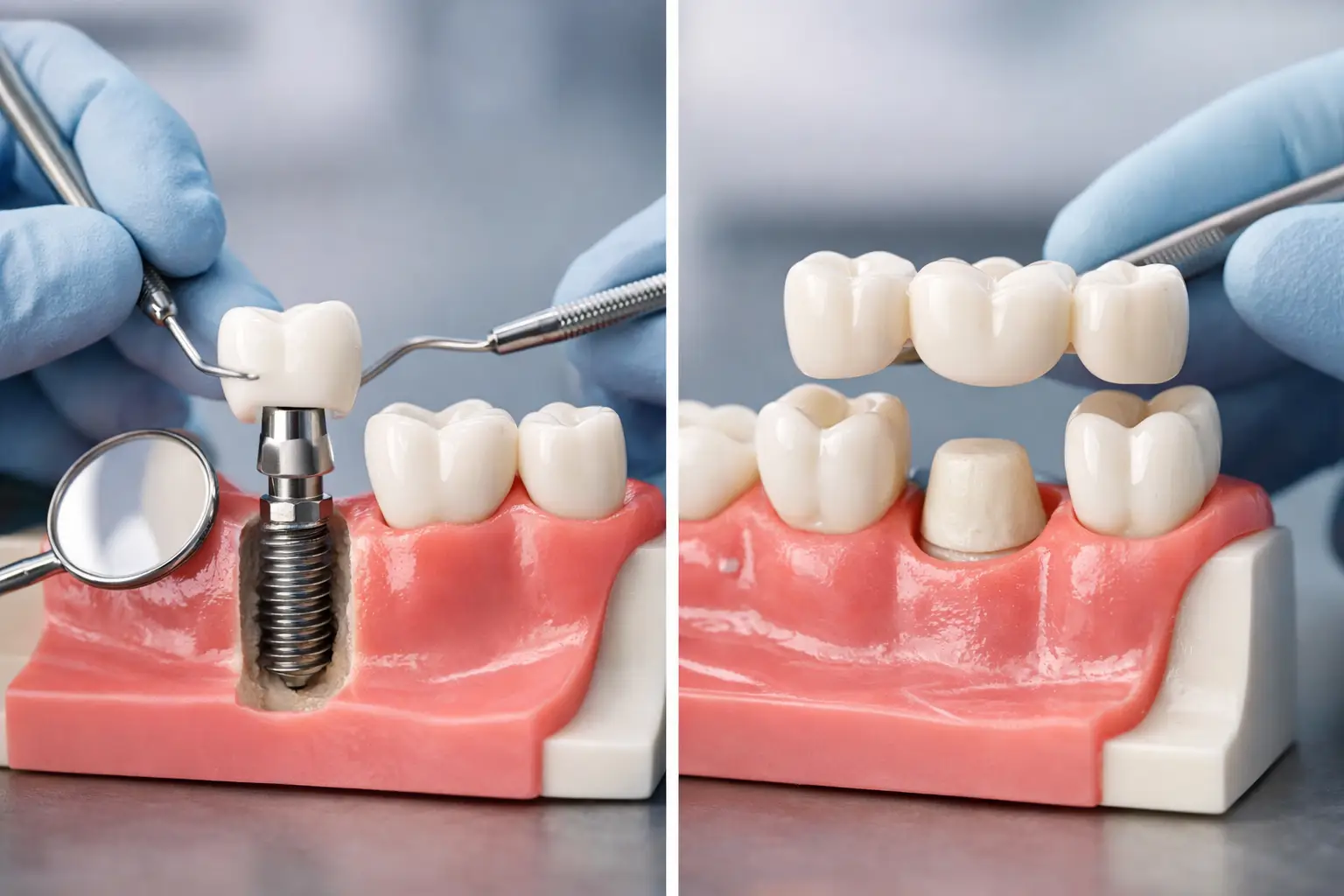
A dental implant replaces the missing tooth root as well as the visible tooth. A small titanium implant is placed in the jawbone, where it gradually integrates with the bone. Once healing is complete, a custom crown is attached to the implant. The finished restoration is designed to look and function much like a natural tooth.
A dental bridge replaces the visible portion of a missing tooth by connecting an artificial tooth to crowns on the teeth beside the gap. Those neighboring teeth are shaped to support the bridge, which is then placed as one connected restoration. In some situations, a bridge may be supported by implants rather than natural teeth, especially when several teeth are missing.
The right choice often comes down to the condition of the surrounding teeth, the health of the jawbone, and whether you prefer a shorter treatment process or a solution intended to stand independently from adjacent teeth.
Why Replacing a Missing Tooth Matters
It can be tempting to wait when a missing tooth is not visible in the front of the mouth. However, gaps can create changes over time. Nearby teeth may drift toward the space, making cleaning and bite alignment more difficult. The opposing tooth can also move out of position because it no longer has a tooth to meet.
After a tooth is lost, the jawbone in that area no longer receives the stimulation it once received during chewing. Bone can gradually shrink. This does not happen overnight, but it can affect future treatment options and, in some cases, facial support.
Replacing a tooth is therefore about more than cosmetics. It helps restore efficient chewing, supports a stable bite, and can make everyday oral hygiene easier.
When a Dental Implant May Be a Good Choice
An implant is often appealing because it does not require the dentist to reshape healthy neighboring teeth. The crown is supported by the implant itself, allowing each tooth to function independently. For a single missing tooth surrounded by healthy teeth, that can be a significant advantage.
Implants also help preserve bone in the area where the tooth was lost. Because the implant is placed in the jawbone, it provides stimulation similar to a natural tooth root. With regular brushing, flossing, and professional care, an implant can be a durable long-term restoration.
The treatment process does require patience. After implant placement, the bone needs time to heal around the implant before the final crown is attached. Some patients may be candidates for a temporary tooth replacement during this period, but each plan is different.
Adequate bone and healthy gums are also important. If bone has already been lost, grafting or other preparatory treatment may be recommended before implant placement. Medical history, medications, smoking, gum disease, and oral hygiene habits can all influence whether an implant is the right choice.
When a Dental Bridge May Make More Sense
A bridge can be an excellent option when the teeth beside the gap already need crowns because of large fillings, fractures, decay, or previous root canal treatment. In that situation, placing crowns on those teeth may already be part of the treatment plan, so a bridge can restore the missing tooth without adding implant surgery.
Treatment with a traditional bridge is usually completed more quickly than an implant. After the supporting teeth are prepared, impressions or digital scans are used to create the bridge. A temporary restoration may be placed while the final bridge is made. Depending on the treatment needs, modern same-day crown technology may also help streamline certain restorative appointments.
A bridge may also be appropriate for someone who is not a good candidate for implant placement, does not want a surgical procedure, or needs to restore function on a shorter timeline. It is a proven treatment, and a well-designed bridge can look natural and chew comfortably.
Its trade-off is that the supporting teeth carry the bridge. They must be prepared for crowns even if they are otherwise healthy, and they require careful cleaning around the artificial tooth. A bridge does not replace the tooth root, so it does not provide the same jawbone stimulation as an implant.
Comparing Comfort, Appearance, and Daily Care
Once treatment is complete, both options should feel comfortable and blend naturally with the surrounding smile. Your dentist will consider tooth shade, shape, bite forces, and the visibility of the area when planning the restoration.
Many patients find that an implant feels especially close to a natural tooth because it stands on its own. You brush it as you would other teeth, while cleaning between the implant crown and nearby teeth as instructed. Regular exams are still essential, since the gums and bone around an implant need monitoring.
A bridge is fixed in place and is not removed for cleaning. You will brush normally, but you also need to clean beneath the replacement tooth using a floss threader, specialized floss, or another recommended tool. This takes a little practice, but it becomes part of a normal home-care routine.
Neither treatment is maintenance-free. Cavities can still form at the edges of crowns supporting a bridge, and gum inflammation can threaten the tissues around an implant. Consistent daily care and hygiene visits are what help either restoration last.
Cost and Long-Term Value
The upfront cost of an implant is often higher because it involves surgical placement, a healing period, and a separate crown. A bridge may have a lower initial cost and can often be completed in fewer visits. Insurance coverage also varies widely, so it is helpful to review your benefits and receive a written treatment estimate before deciding.
Initial cost is only one part of the conversation. An implant may offer long-term value by preserving adjacent teeth and helping maintain bone. A bridge may be the more practical investment if the neighboring teeth already require crowns or if timing and budget are immediate concerns.
No restoration lasts forever under every circumstance. A bridge may eventually need replacement because of wear, decay around a supporting tooth, or changes in the bite. Implant crowns can also wear or loosen and may need maintenance over the years. A comprehensive examination gives your dentist the information needed to discuss the likely costs and care needs for your specific situation.
How Your Dentist Helps You Decide
A thoughtful recommendation begins with more than a quick look at the gap. Your dentist will evaluate your gums, bite, neighboring teeth, bone levels, and overall health. Digital X-rays and, when needed, three-dimensional imaging can show whether there is sufficient bone for an implant and identify issues that need attention first.
You should also be able to discuss practical concerns openly. Are you managing an upcoming event? Do you have difficulty chewing now? Are the teeth beside the space already heavily restored? Does the idea of surgery make you uneasy? These details matter because treatment should work for your life, not simply for a diagram of your mouth.
At Kingsway Family Dentistry, treatment planning is designed to be clear and comfortable. You can ask questions, review your options, and understand the expected steps before moving forward.
A Choice That Supports Your Next Step
Choosing between an implant and a bridge is rarely about finding one universal winner. A healthy patient with strong bone and untouched neighboring teeth may benefit most from an implant. Someone with adjacent teeth that already need crowns, a tighter timeline, or health factors that limit surgery may be better served by a bridge.
The most helpful next step is a comprehensive examination that looks at the whole picture. With a clear plan, replacing a missing tooth can feel manageable again – and you can move forward with a smile that feels comfortable, functional, and truly yours.