
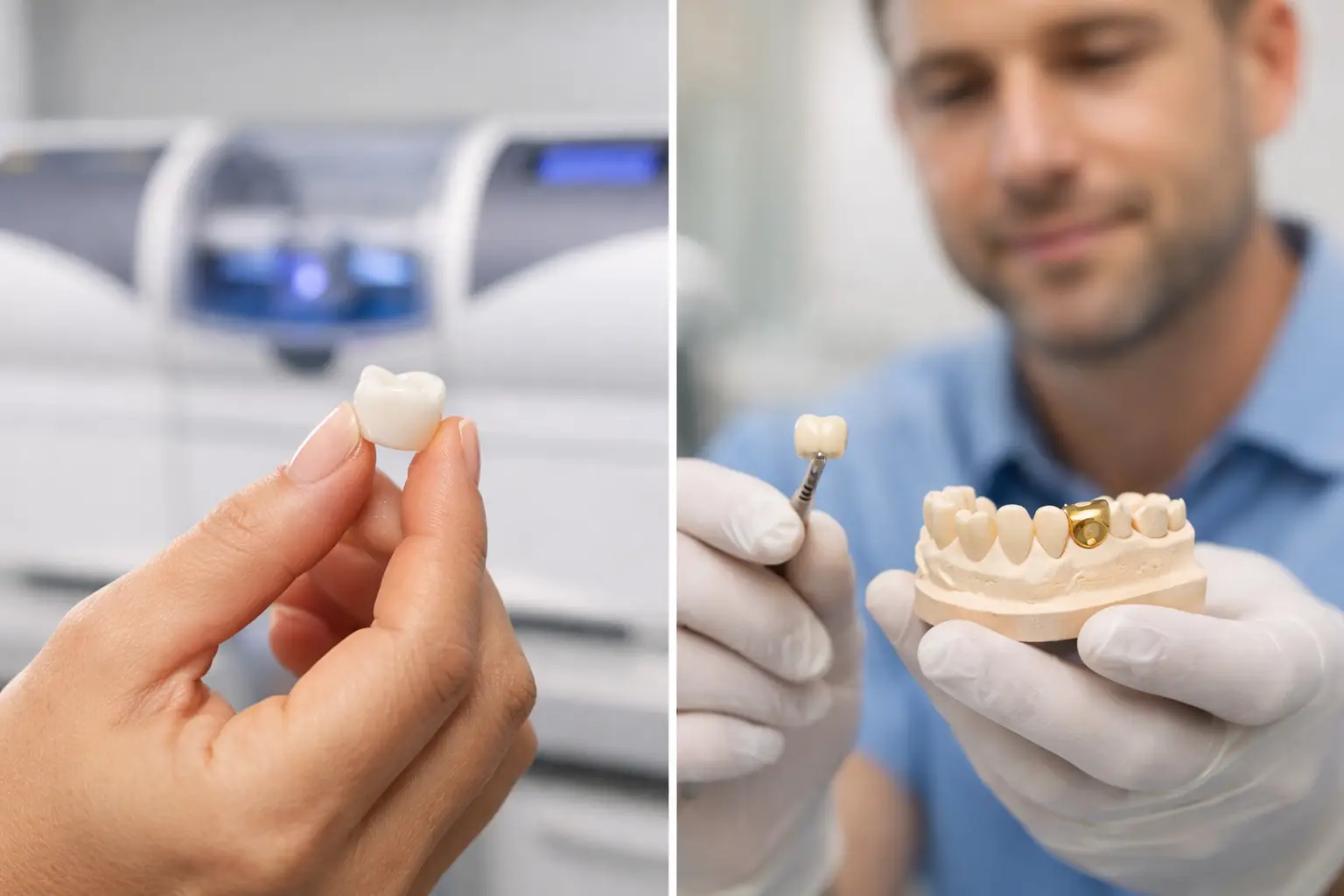

A cracked tooth does not always wait for a convenient week. When a crown is recommended, one of the first questions patients ask is how a CEREC crown vs traditional crown compares – especially if they are balancing a busy schedule, tooth sensitivity, and the desire to protect their smile promptly. Both options can restore a damaged tooth beautifully and reliably. The better choice depends on your tooth, bite, cosmetic goals, and treatment needs.
Why a crown may be recommended
A dental crown is a custom-made cover that fits over a tooth. It restores strength, shape, and function when too much natural tooth structure has been lost for a filling to provide dependable support. Crowns are often recommended for teeth with large or failing fillings, cracks, significant decay, worn enamel, or a history of root canal treatment. They may also be used to restore a dental implant or improve the appearance of a misshapen or severely discolored tooth.
Before recommending a crown, your dentist completes a thorough examination and may use digital X-rays to assess the tooth, surrounding bone, and roots. A crown is not a one-size-fits-all treatment. The goal is to preserve as much healthy tooth structure as possible while giving the tooth the protection it needs to function comfortably.
CEREC crown vs traditional crown: the main difference
The central difference is how the crown is designed and made.
A CEREC crown is created in the dental office using digital scanning, computer-aided design, and an in-office milling unit. After the tooth is prepared, a detailed digital scan replaces conventional impression material. The dentist designs the crown to fit your tooth and bite, then mills it from a high-quality ceramic block. In many cases, the crown can be placed during the same appointment.
A traditional crown is also custom-made, but it is fabricated by a dental laboratory. After the tooth is prepared, your dentist takes an impression or digital scan and places a temporary crown. The final crown is typically returned from the lab after one or two weeks, at which point you return for final placement.
Both approaches involve careful planning, tooth preparation, and attention to how the crown meets neighboring teeth and the opposing bite. The technology changes the workflow, not the need for clinical precision.
The convenience of a same-day CEREC crown
For many working adults and families, time is the most noticeable advantage of CEREC treatment. Completing the process in one visit can mean fewer appointments, no temporary crown, and less time arranging childcare or taking time away from work.
Temporary crowns serve an important purpose, but they can occasionally feel bulky, loosen, or require patients to avoid sticky and hard foods until the permanent restoration is placed. With a same-day crown, the final ceramic restoration is bonded or cemented before you leave the office in appropriate cases.
Same-day treatment can also be particularly helpful when a tooth has fractured or a large filling has failed. If the tooth is suitable for CEREC, prompt restoration may reduce the time it remains vulnerable. That said, speed should never override proper diagnosis. A tooth with active infection, extensive damage below the gumline, or a need for additional treatment may require a different timeline.
Fit and appearance: both can look natural
Patients sometimes assume a lab-made crown must fit better or look more natural than a same-day crown. In reality, both CEREC and traditional crowns can provide an excellent fit and lifelike appearance when they are carefully planned and placed.
Digital scanning allows the dentist to capture detailed images of the prepared tooth and surrounding teeth. The crown design can be adjusted for contact points, contours, and bite before it is milled. CEREC crowns are made from strong, tooth-colored ceramic and are often an appealing choice for visible teeth as well as many back teeth.
A traditional crown may be preferred when a case requires more complex customization. A laboratory can use a broader range of materials and techniques, including layered ceramics that can recreate subtle variations in translucency and color. For a highly visible front tooth, particularly when matching neighboring natural teeth is challenging, the additional artistic characterization available through a dental lab may be valuable.
Your dentist will consider where the tooth is located, the shade of nearby teeth, your gumline, and how much natural tooth remains. The best-looking crown is one that fits your smile rather than drawing attention to itself.
Strength and durability depend on more than the method
Both types of crowns are designed to withstand everyday chewing forces. Their longevity depends on several factors: the material selected, the amount of healthy tooth supporting the crown, bite forces, oral hygiene, and whether you grind or clench your teeth.
CEREC crowns are commonly milled from durable ceramic. They can be an excellent option for many single-tooth restorations, particularly when there is enough tooth structure for a stable design. Traditional crowns may be made from materials such as all-ceramic, zirconia, porcelain fused to metal, or metal alloy, depending on the needs of the tooth. Some materials are especially useful for heavy biting forces in the back of the mouth.
No crown is indestructible. Chewing ice, using teeth to open packaging, and untreated teeth grinding can chip or fracture a restoration. Daily brushing, cleaning between teeth, and regular dental exams help protect the crown and the natural tooth at its edge. If grinding is a concern, your dentist may recommend a protective night guard.
When a traditional crown may be the better choice
CEREC is an excellent solution for many patients, but it is not automatically the right answer for every tooth. Traditional crowns may be recommended when the restoration is part of a bridge, when complex cosmetic shading is needed, or when the tooth requires a material selected specifically for unusually heavy bite pressure.
A lab-made crown may also be preferred if the preparation is especially complex or if your dentist wants to coordinate the crown with other planned dental work. For example, if several front teeth are being restored, a laboratory may offer more flexibility in creating a consistent shape, texture, and shade across the smile.
Choosing a traditional crown is not choosing an outdated option. It remains a highly effective, carefully customized restorative treatment. The right approach is the one that gives your tooth the best long-term outlook.
What about cost and insurance coverage?
The cost of a CEREC crown vs traditional crown can vary based on the tooth being restored, the material used, the complexity of treatment, and your dental benefits plan. Same-day technology does not always mean a higher fee, and lab-based treatment does not always mean a lower one. The details of your individual treatment plan matter most.
Many insurance plans provide some coverage for crowns when they are medically necessary, though coverage limits, deductibles, waiting periods, and frequency rules can apply. Cosmetic changes may not be covered in the same way as treatment needed to repair a cracked or decayed tooth. A dental team can review your estimate and help you understand what questions to ask your insurance provider before treatment begins.
How your dentist helps you decide
The most useful question is not simply, “Which crown is better?” It is, “Which crown is best for this tooth?” Your dentist will evaluate the location of the tooth, the size of the restoration, your bite, your smile goals, your timeline, and your overall oral health.
At Kingsway Family Dentistry, digital technology and comprehensive treatment planning make it possible to discuss your options clearly, without pressure. If same-day CEREC treatment is appropriate, you may be able to leave with your permanent crown in place. If a traditional crown offers the stronger or more esthetic solution, that recommendation is equally focused on protecting your smile.
If you have a broken tooth, persistent sensitivity, pain when biting, or an old filling that keeps failing, do not wait for the problem to become more complicated. A timely exam can clarify whether a crown is needed and help you move forward with a treatment plan that feels comfortable, practical, and right for you.