
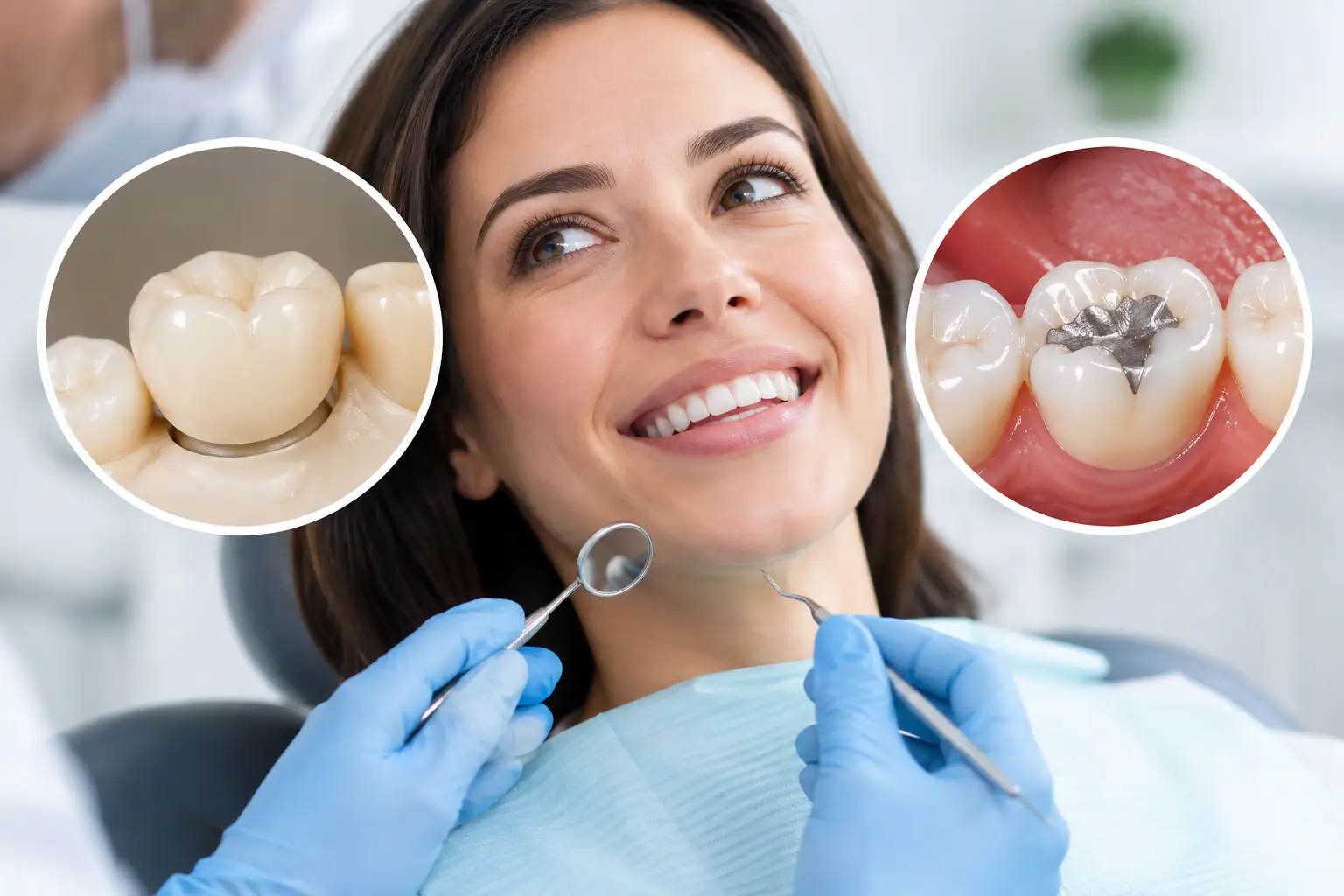

A tooth can look like it needs a simple repair and still have damage below the surface. That is why the choice of a crown versus dental filling is not based on the size of the visible hole alone. Your dentist considers how much healthy tooth remains, whether the tooth has cracks, how hard it works when you bite, and whether decay has reached the nerve.
Both treatments can preserve a damaged tooth and help you eat, speak, and smile comfortably. The right option is the one that restores the tooth without removing more healthy structure than necessary.
Crown versus dental filling: the key difference
A dental filling repairs a localized area of decay or minor damage. After removing decay and cleaning the area, the dentist places a tooth-colored composite material that bonds to the remaining tooth. Fillings are commonly used for small to moderate cavities, small chips, and replacement of older fillings that have worn down or leaked.
A crown covers the entire visible portion of a tooth above the gumline. It is shaped and colored to look like a natural tooth, then cemented in place. Because it surrounds the tooth, a crown can hold together a tooth that has been weakened by extensive decay, a large fracture, a very large filling, or root canal treatment.
Think of a filling as a repair within the tooth and a crown as a protective shell around it. Neither is automatically better. The amount and quality of remaining tooth structure usually guides the decision.
When a filling may be the better choice
A filling is often the most conservative option when decay is limited and the surrounding enamel is strong. If your tooth has a small cavity, a modest chip, or an older filling that needs replacement, a new filling may restore it effectively in one appointment.
Composite fillings are matched closely to the natural shade of your tooth. They can be an especially appealing option for teeth that show when you smile, as well as for smaller repairs in back teeth. The procedure is usually straightforward: the tooth is numbed, decay or damaged material is removed, and the filling is placed, shaped, and hardened.
The main advantage of a filling is that it preserves more of the natural tooth. It is also generally less involved and less costly upfront than a crown. But a filling has limits. When a filling becomes too large relative to the remaining tooth, the tooth walls may flex or crack under chewing pressure. Replacing a large filling with an even larger filling does not always make the tooth stronger.
When a crown offers better protection
A crown is often recommended when there is not enough healthy tooth left to support a dependable filling. This may happen after a large cavity, a broken cusp, repeated filling replacements, or a fracture that has weakened the tooth.
Back teeth face substantial biting forces every day. If a molar has lost a large portion of its chewing surface, a crown can distribute those forces more evenly and reduce the chance of further breakage. Crowns are also commonly recommended after root canal therapy. A tooth that has required root canal treatment may have lost significant structure from decay, previous restorations, or the access opening needed for treatment.
A crown can also improve the appearance of a tooth that is badly discolored, worn, or misshapen. Still, cosmetic improvement alone does not mean a crown is the first choice. For a tooth with minor cosmetic concerns and healthy structure, bonding, whitening, or a veneer may be more appropriate. Your dentist should explain why a crown is being considered and what alternatives may be suitable.
What happens if a tooth has a crack?
A crack changes the crown versus dental filling conversation. A small surface craze line may not require treatment at all. But a crack that causes pain when biting, sensitivity, or a piece of tooth to break away can be more serious.
A filling can repair a chipped area, but it may not stop a deeper crack from spreading. If the tooth is otherwise restorable, a crown may brace the tooth and protect it from the forces that could widen the fracture. If a crack extends too far below the gumline or into the root, however, a crown may not be enough. Early assessment matters because prompt treatment can sometimes save a tooth that might otherwise be lost.
Call your dental office promptly if you have sharp pain when chewing, a broken tooth, swelling, or a filling that has fallen out. Avoid chewing on that side until you can be examined.
How your dentist decides between a crown and a filling
The decision begins with a comprehensive examination. Your dentist will look at the tooth, evaluate your bite, check for cracks, and use digital X-rays when needed to see decay between teeth or beneath an existing restoration. They may also assess the health of the tooth nerve and surrounding gums.
Several practical factors matter. The location of the tooth is one. A small filling may work well in a front tooth that experiences lighter pressure, while the same amount of lost structure in a molar may call for more protection. Your history also matters. If a tooth has needed multiple large fillings over time, a crown may offer a more predictable long-term repair.
Your dentist should also consider what you want from treatment. Some patients need the most conservative repair now, while others prefer a treatment designed to reduce the risk of a future fracture. There may be more than one reasonable option. A clear treatment plan should explain the benefits, limitations, expected longevity, and cost considerations of each choice.
Time, comfort, and long-term care
A filling can usually be completed in one visit. Traditional crowns often involve preparing the tooth, taking a digital impression, placing a temporary crown, and returning for the final crown. At Kingsway Family Dentistry, CEREC same-day crown technology may allow eligible patients to receive a custom crown in a single appointment, avoiding a temporary crown and second visit.
Whether you receive a filling or a crown, the restored tooth still needs daily care. Brush twice a day with fluoride toothpaste, clean between your teeth every day, and keep up with regular hygiene visits and examinations. Crowns do not decay, but the natural tooth at the crown edge can still develop decay. Fillings can also wear, stain, chip, or leak over time.
If you clench or grind your teeth, tell your dentist. Nighttime grinding can place heavy pressure on fillings and crowns alike. A custom night guard may help protect your teeth and dental work.
Do crowns and fillings last forever?
No dental restoration lasts forever, but both can serve you well for many years with proper care. Longevity depends on the size of the restoration, the tooth’s location, your bite, oral hygiene, diet, and whether you grind your teeth.
A smaller filling in a low-stress area may last a long time. A large filling in a heavily used molar is more likely to need replacement or lead to a crack over time. A well-made crown can provide durable protection, but it can still chip, loosen, or develop decay at its margins if plaque accumulates.
The goal is not simply to choose the treatment that may last longest in the abstract. It is to choose the restoration that gives your particular tooth the best chance of staying healthy and functional.
A comfortable next step for a damaged tooth
If you have tooth sensitivity, pain when biting, a broken filling, or a visible chip, you do not have to decide on a crown or filling before you come in. An examination can show what is happening beneath the surface and help you understand your options without pressure.
The best repair is often the one that feels appropriately sized for the problem: conservative when the tooth is strong, protective when it is vulnerable, and planned with your comfort and long-term oral health in mind.