
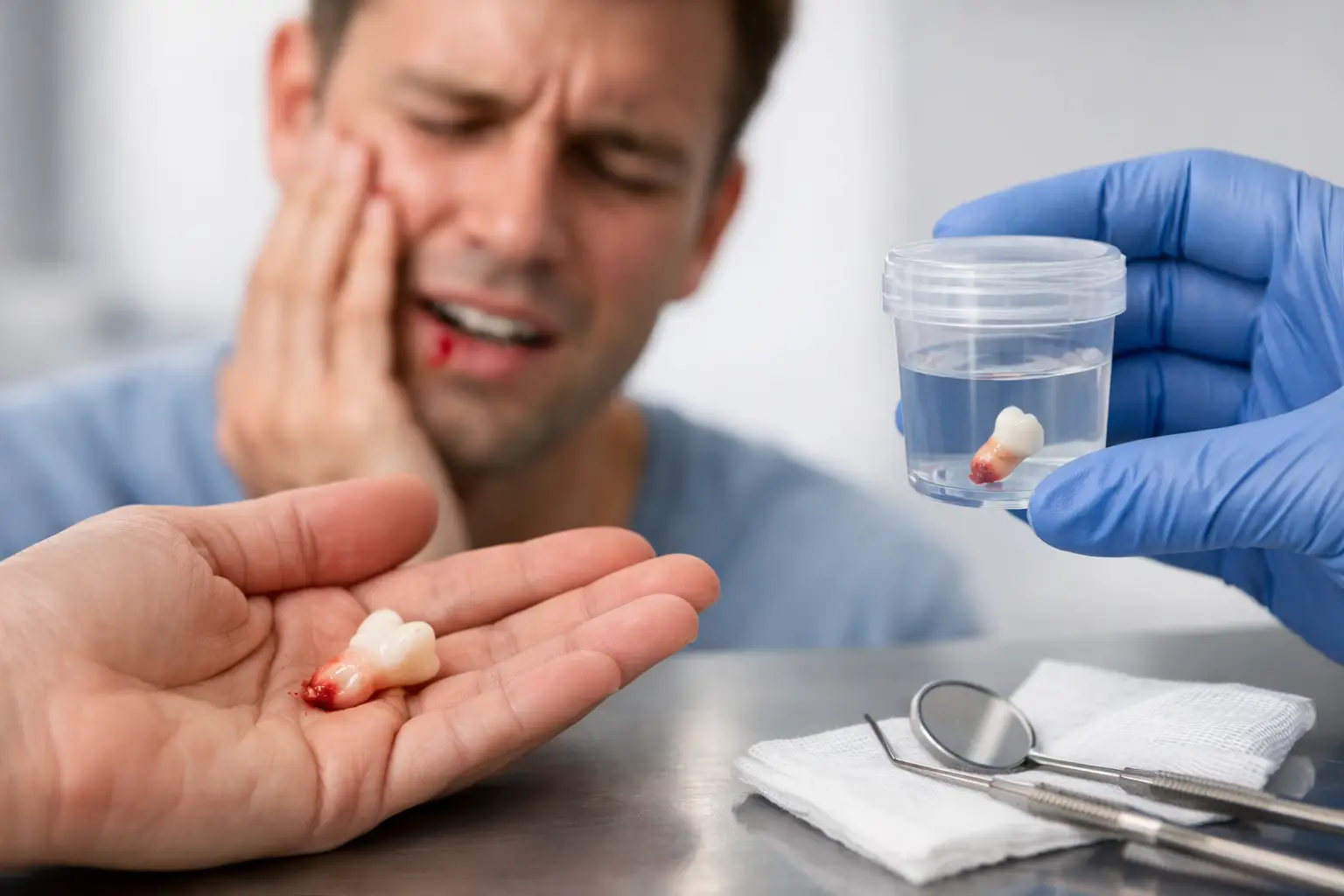

A tooth can be knocked out in one quick moment – a fall at the playground, a hockey puck, a bike accident, or a slip at home. Knowing what to do for a knocked out tooth before an accident happens can make a real difference. A permanent tooth may be saved when it is handled correctly and seen by a dentist without delay.
This is a dental emergency. Stay as calm as you can, focus on the next right step, and contact an emergency dentist immediately. The goal is to protect the delicate cells on the tooth root until professional care is available.
What to Do for a Knocked Out Tooth Right Away
First, find the tooth. Pick it up by the crown, which is the white chewing surface normally visible above the gums. Do not touch the root. The root is covered with fragile tissue that helps the tooth reattach after it is placed back in its socket.
If the tooth is dirty, rinse it gently for a few seconds with milk or saline solution. If neither is available, a brief rinse with clean running water is better than scrubbing it. Do not use soap, alcohol, disinfectant, or a toothbrush. Do not scrape the root or wrap the tooth in tissue, cloth, or paper towel.
If the knocked-out tooth is a permanent tooth and the person is awake, cooperative, and able to follow directions, gently place it back into the empty socket right away. Make sure it faces the correct direction, then have the person bite softly on clean gauze or a folded clean cloth to hold it in place. Do not force it if it will not go in easily.
Immediate replanting is often the best option, but it is not appropriate in every situation. A young child may be too upset to safely hold a tooth in place, and anyone who is drowsy, confused, or at risk of swallowing the tooth should not try this step. In those cases, store the tooth properly and head for urgent dental care.
Never Reinsert a Baby Tooth
A knocked-out baby tooth should not be put back into the socket. Replanting a primary tooth can damage the developing adult tooth underneath. Even so, a child with a knocked-out baby tooth still needs a prompt dental assessment. The dentist can check for injury to nearby teeth, the gums, and the jaw, and explain what to expect as the permanent tooth develops.
If you are unsure whether the tooth is a baby tooth or a permanent tooth, bring it with you and call the dental office for guidance. In general, permanent front teeth begin appearing around age six or seven, but every child’s dental development is different.
Keep the Tooth Moist While You Travel
A tooth should never be left dry. If it cannot be placed back in the mouth, use a storage option that protects the root while you travel to the dentist. Cold milk is often the most practical choice because it is widely available and is gentler on root cells than plain water.
Place the tooth in a small, clean container of milk. If milk is unavailable, saline solution is another good choice. A tooth preservation kit, if one is available through a school, sports facility, or first-aid kit, can also be used as directed.
For an older child or adult who can reliably avoid swallowing it, the tooth may be held inside the cheek in saliva. This is not a safe choice for a small child or for someone who is crying, nauseated, unconscious, or unable to cooperate. In those situations, use milk or saline instead.
Avoid storing the tooth in plain water for any longer than absolutely necessary. Water can harm the cells on the root. Just as importantly, do not let the tooth dry out while searching for a container or waiting to call the office.
Get Emergency Dental Care as Soon as Possible
Call a dentist immediately and explain that a permanent tooth has been completely knocked out. The first 30 minutes after the injury are especially valuable, although treatment may still be possible after that. Do not decide the tooth cannot be saved simply because more time has passed. Bring the tooth or any pieces you find to the appointment.
At Kingsway Family Dentistry, urgent dental concerns are assessed with a focus on relieving pain, protecting the tooth, and creating a clear treatment plan. For a knocked-out permanent tooth, the dentist will examine the area, assess surrounding teeth and soft tissues, and use digital imaging when needed to look for root, bone, or jaw injuries.
If the tooth has been replanted, it may be stabilized with a small flexible splint attached to neighboring teeth. This helps keep it still while supporting tissues heal. Follow-up visits are essential because the tooth and root may need monitoring over time. Depending on the injury and the stage of root development, additional treatment such as root canal therapy may be recommended later.
Saving the natural tooth is usually the preferred outcome, but it depends on the condition of the tooth, how it was stored, how long it was out of the mouth, and whether there are other injuries. If a tooth cannot be saved, your dentist can explain restorative options that support appearance, speech, chewing, and long-term oral health.
Manage Bleeding, Pain, and Other Injuries
A little bleeding from the socket or lips is common. Have the person bite gently on clean gauze or a clean cloth. Apply light pressure to cuts on the lips or face with a clean cloth. A cold pack against the outside of the cheek can help reduce swelling and discomfort. Keep the cold pack wrapped in a towel rather than placing ice directly on the skin.
For pain relief, use an over-the-counter medicine only as directed on the label and only if it is safe for that person. Do not place aspirin or any pain medicine directly against the gums. It can irritate soft tissues and will not treat the injury.
Dental trauma can occur alongside a concussion, facial fracture, or deep cut. Seek emergency medical care first if there is loss of consciousness, vomiting, confusion, severe headache, trouble breathing or swallowing, uncontrolled bleeding, a suspected broken jaw, or a serious head or neck injury. Once urgent medical concerns are addressed, arrange dental treatment as quickly as possible.
What Not to Do After a Tooth Is Knocked Out
Well-meaning actions can reduce the chance of saving a tooth. Do not handle it by the root, scrub it clean, use household cleaners, or leave it in a napkin. Do not delay care to wait for swelling to go down. And do not assume a tooth that looks intact has no further damage – the root, bone, and nearby teeth may also be affected.
Avoid hard foods after the injury. If the tooth has been replanted or stabilized, choose soft foods and follow the dentist’s instructions about brushing, rinsing, sports, and follow-up care. Keeping scheduled rechecks matters as much as the first emergency visit because complications are not always visible right away.
Help Your Family Prepare Before an Accident
Accidents cannot be fully prevented, but mouthguards reduce the risk of dental injuries during contact sports and activities with a fall risk. A properly fitted sports mouthguard is particularly worthwhile for children and teens who play hockey, football, basketball, lacrosse, or similar sports.
It also helps to keep your dental office number saved in your phone and know where to find milk or saline quickly at home, school, and practice. Parents, coaches, and caregivers do not need to solve every detail in the moment. They only need to protect the tooth, avoid damaging the root, and get professional help quickly.
A knocked-out tooth is frightening, especially when it happens to a child. Prompt, gentle action gives the tooth its best chance and gives your family a clear path forward: pick it up by the crown, keep it moist, and seek emergency dental care without waiting.