
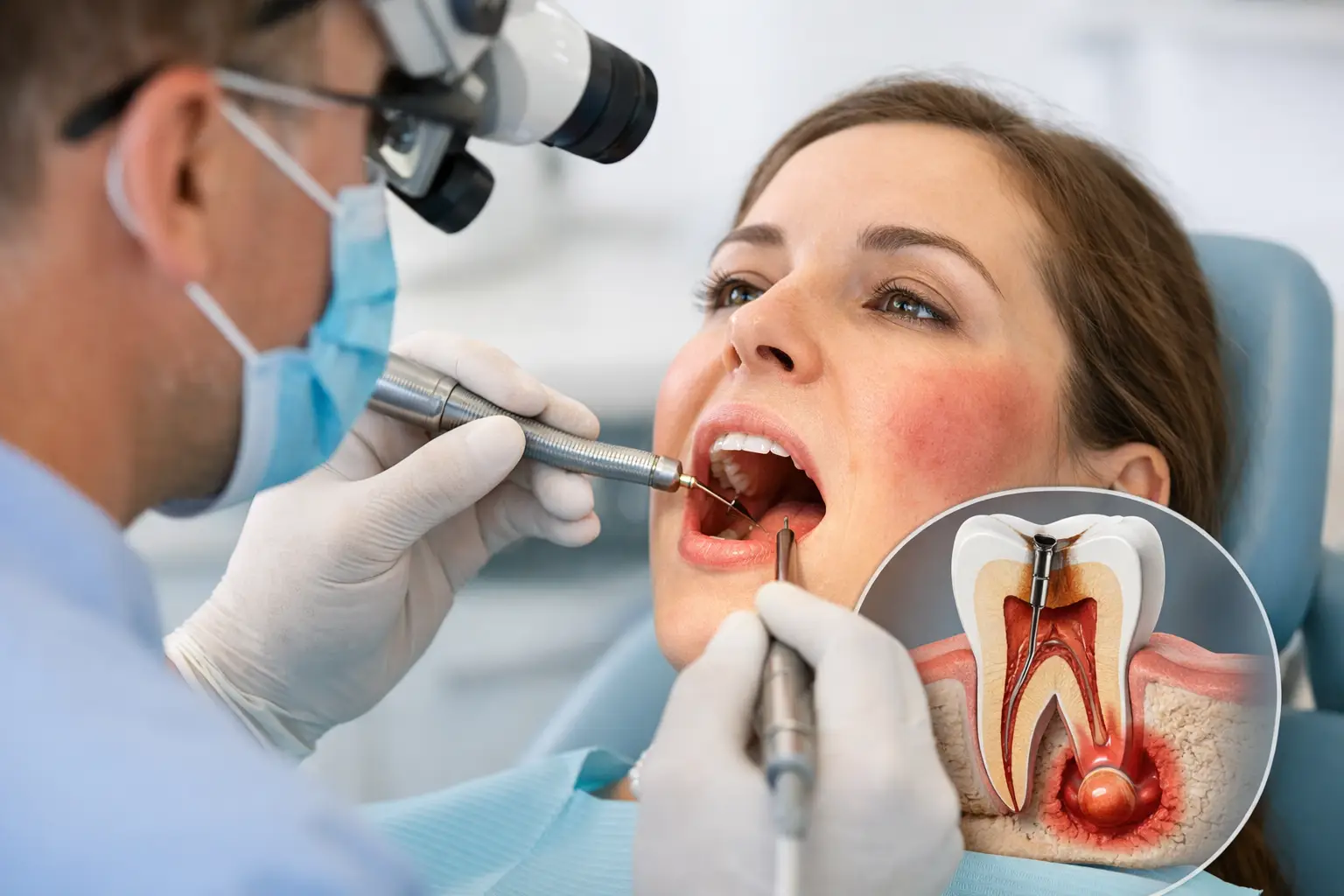

A toothache that pulses, worsens when you bite, or wakes you at night can be more than an inconvenience. When an infection forms around the root of a tooth, root canal treatment for an abscess may be the most effective way to relieve pain, clear the infection, and preserve your natural tooth. Prompt care matters because a dental abscess will not heal on its own.
An abscess can feel alarming, especially when swelling or severe pain appears quickly. The good news is that modern root canal therapy is a focused treatment designed to address the source of the problem. Your dental team can explain what is happening, review your options clearly, and help you move forward at a pace that feels manageable.
What Is a Dental Abscess?
A dental abscess is a pocket of pus caused by a bacterial infection. It often develops when bacteria reach the pulp, the soft tissue inside the tooth that contains nerves and blood vessels. Deep decay, a cracked tooth, repeated dental work, or an injury can create a path for bacteria to enter.
As the infection moves through the tooth and into the surrounding bone or gum tissue, pressure builds. That pressure is a common reason abscess pain can be intense. Some people notice a small bump on the gum that drains periodically, while others have no obvious swelling at all. A tooth can also become less painful if the nerve inside dies, but the infection may still be active.
Common symptoms include persistent tooth pain, sensitivity to hot or cold temperatures, pain when chewing, a bad taste in the mouth, swollen gums, facial swelling, or a loose-feeling tooth. However, symptoms alone cannot confirm the cause. A comprehensive examination and digital X-rays help identify the affected tooth and show whether infection has reached the area around its root.
When Root Canal Treatment for an Abscess Is Recommended
Root canal therapy is often recommended when the tooth can be restored and the infection is coming from inside the tooth. The goal is not simply to quiet the pain. Treatment removes infected pulp tissue and bacteria from the root canals, then seals the space to help prevent bacteria from returning.
Saving a natural tooth is usually preferable when it is a predictable option. Your own tooth helps maintain normal biting function and can avoid the additional treatment needed to replace an extracted tooth. That said, a root canal is not right for every situation. If a tooth is severely cracked below the gumline, has too little healthy structure remaining, or cannot be restored reliably, extraction may be discussed instead.
Antibiotics may be prescribed in certain cases, such as when swelling is spreading or there are signs of a more extensive infection. They can be helpful alongside dental care, but they do not remove the infected tissue inside the tooth. Treating the source with root canal therapy or, when necessary, extraction is what resolves the underlying problem.
How Your Dentist Diagnoses the Problem
Before recommending treatment, your dentist will assess the tooth, gums, bite, and nearby teeth. Digital X-rays can reveal changes in the bone around a root, deep decay, existing dental work, or other concerns that are not visible during an exam.
Testing the tooth’s response to temperature or pressure may also help determine whether the pulp is inflamed, infected, or no longer vital. Your dentist will ask about when the discomfort began, what triggers it, and whether you have had swelling, fever, or drainage. These details help create a treatment plan that fits the condition of your tooth rather than relying on symptoms alone.
If you are anxious about treatment, say so at the beginning of the visit. A comfort-focused dental team can talk through each step, build in breaks when appropriate, and help make the appointment feel more predictable.
What Happens During Root Canal Treatment for an Abscess?
Root canal treatment is performed with local anesthetic, so the area is numbed before work begins. Once you are comfortable, the dentist makes a small opening in the tooth to reach the infected pulp. The canals inside the roots are carefully cleaned and shaped using specialized instruments.
The space is then disinfected to reduce bacteria. Depending on the severity of the infection and the anatomy of the tooth, treatment may be completed in one visit or require more than one appointment. In some cases, medication is placed inside the canals between visits to help control infection before the tooth is sealed.
Once the canals are clean, they are filled with a biocompatible material and sealed. The opening in the tooth receives a temporary or permanent restoration. Many teeth that have had root canal therapy, especially back teeth used for heavy chewing, need a crown afterward. A crown protects the remaining tooth structure and lowers the risk of fracture.
For busy patients, same-day crown technology may be an option when clinically appropriate. Your dentist will recommend the restoration that best suits the tooth, your bite, and the amount of healthy tooth structure left.
You may feel pressure during treatment, but you should not feel sharp pain. Let your dentist know right away if you are uncomfortable. Good communication allows the team to adjust and keep the appointment as comfortable as possible.
Recovery and Care After Treatment
It is normal to have mild tenderness around the treated tooth for a few days, particularly when biting. This happens because the tissues around the root may still be inflamed from the infection and the treatment itself. Your dentist may recommend an appropriate over-the-counter pain reliever based on your health history.
Until the tooth has its final restoration, avoid chewing hard or sticky foods on that side. A tooth that has been treated but not yet fully restored may be more vulnerable to cracking. Continue brushing twice daily and cleaning between your teeth, taking extra care around any temporary filling or crown.
Call your dental office if pain becomes severe, swelling returns or increases, your temporary restoration comes out, or your bite feels uneven. Follow-up appointments are part of protecting the result, not an optional extra.
When a Dental Abscess Needs Urgent Care
A tooth abscess should be assessed promptly, even if the pain comes and goes. Seek urgent dental care for facial swelling, fever, worsening pain, drainage, or difficulty opening your mouth. If swelling affects your eye area, neck, breathing, or swallowing, seek emergency medical care immediately.
Do not place aspirin directly on the gum or tooth. It can burn soft tissue and will not treat the infection. Warm saltwater rinses may provide temporary comfort, but they are not a substitute for an examination and treatment.
Questions Patients Often Ask
Will a root canal get rid of the abscess?
When the infection is caused by bacteria inside a tooth that can be restored, root canal treatment removes the source of infection and allows the surrounding tissues to heal. Healing takes time, and your dentist may monitor the area with follow-up X-rays.
Is root canal treatment painful?
The infection itself is often more painful than the procedure. Local anesthetic is used to numb the tooth and surrounding area. Most patients describe the treatment as similar to having a filling, with some tenderness afterward.
Can an abscess return after a root canal?
It is possible, though not expected, for infection to recur if bacteria re-enter the tooth through a leaking restoration, new decay, or a crack. Completing the recommended crown or final restoration and maintaining regular dental visits can reduce that risk.
A painful or swollen tooth deserves timely attention, not guesswork. If you are experiencing symptoms of an abscess, Kingsway Family Dentistry can assess the problem, explain your treatment options, and help you take the next comfortable step toward relief.