
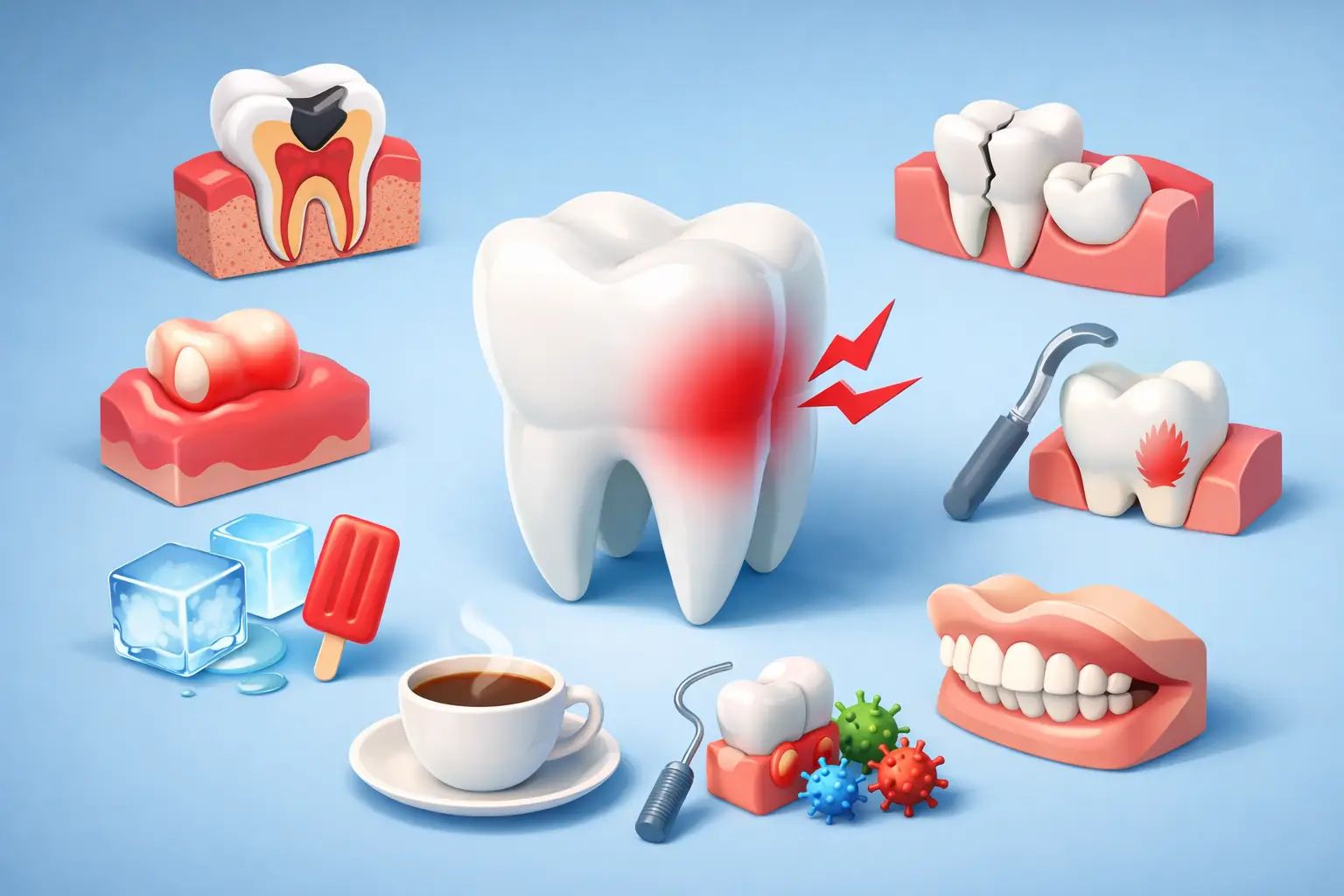

A tooth that starts hurting during lunch, wakes you at night, or sends a sharp jolt when you sip something cold can be hard to ignore. What causes sudden tooth pain is not always visible from the outside, but the symptom often means a tooth, gum, restoration, or jaw issue needs attention. Prompt care can ease discomfort and, in many cases, help preserve the tooth before a small problem becomes a more involved one.
Tooth pain can range from brief sensitivity to a constant throb. The pattern matters: pain from cold may point to a different concern than pain when biting, swelling, or pain that seems to spread toward the ear or jaw. A comprehensive dental examination and digital X-rays can identify what is happening beneath the surface and guide treatment that fits your needs.
What causes sudden tooth pain?
Sudden tooth pain has several possible causes. Some are minor and temporary, while others require urgent treatment. Trying to diagnose the problem at home can be difficult because teeth share nerve pathways, and pain from one area can feel as though it is coming from another tooth.
1. Tooth decay that reaches the inner tooth
A cavity does not always hurt at first. As decay moves through the enamel and deeper into the dentin, the tooth can become sensitive to sweets, cold drinks, or hot foods. If bacteria reach the pulp, the soft tissue containing nerves and blood vessels inside the tooth, pain may become spontaneous, lingering, or severe.
Early decay may be treated with a filling. When the pulp is inflamed or infected, root canal therapy may be recommended to remove the infection, relieve pain, and keep the natural tooth whenever possible. Waiting for pain to disappear is not a reliable solution. An infected tooth can briefly stop hurting if the nerve is damaged, while the infection continues to spread.
2. A cracked tooth or damaged filling
Biting into popcorn kernels, hard candy, ice, or an unpopped seed can crack a tooth. Teeth can also develop small fractures over time from clenching, grinding, large older fillings, or normal wear. A cracked tooth often causes a sharp, unpredictable pain when chewing or when releasing a bite.
A loose, chipped, or worn filling can create similar symptoms by allowing food, temperature changes, and bacteria to reach sensitive areas. The treatment depends on the size and location of the crack. Bonding or a new filling may be enough for a minor issue, while a crown can protect a weakened tooth. A deep crack sometimes requires root canal treatment or extraction if the tooth cannot be restored.
3. Exposed roots and tooth sensitivity
If a quick zing occurs with cold air, ice water, or brushing, exposed dentin may be the cause. Dentin contains tiny channels that lead toward the tooth’s nerve. When enamel is worn down or gums recede, temperature changes can travel through those channels and trigger discomfort.
Brushing too aggressively, gum disease, acidic drinks, tooth grinding, and natural aging can all contribute. Sensitivity toothpaste may help some people, but persistent or worsening sensitivity deserves an examination. A dentist can rule out decay and cracks, then recommend options such as fluoride treatment, bonding, a night guard, or gum care based on the cause.
4. Gum infection or an abscess
Pain may come from the gums rather than the tooth itself. Gum disease can create deep pockets around teeth where bacteria collect, leading to tenderness, bleeding, bad breath, or a sore area when chewing. A dental abscess is a pocket of infection that can form at the root of a tooth or in the gums. It may cause intense throbbing, swelling, a pimple-like bump on the gum, or a bad taste in the mouth.
An abscess needs prompt dental treatment. Antibiotics may be part of care in certain situations, but they do not remove the source of infection on their own. Drainage, root canal therapy, deep cleaning, or extraction may be needed depending on where the infection started and whether the tooth can be saved.
5. Food trapped between teeth
A piece of meat, popcorn hull, or fibrous vegetable trapped tightly between teeth can irritate the gum and create surprisingly sharp pain. Flossing gently may remove the debris. Do not force sharp objects between teeth or gums, as this can cause injury.
If pain remains after cleaning the area, or if food repeatedly catches in the same spot, there may be a cavity, a damaged filling, gum recession, or a space between teeth that needs professional attention.
6. Teeth grinding and jaw tension
Many people clench or grind their teeth during sleep without realizing it. This places heavy pressure on teeth, dental work, and jaw muscles. You may notice morning headaches, jaw soreness, flattened or chipped teeth, or a dull ache in several teeth rather than one clear problem tooth.
Stress can make grinding worse, but bite alignment and sleep habits can also play a role. A custom night guard can help protect teeth from further wear. If a single tooth is painful when biting, it is still important to check for a crack or infection rather than assuming grinding is the only cause.
7. A recent dental procedure
It is common to have temporary sensitivity after a filling, crown preparation, whitening treatment, or professional cleaning, especially if gum tissue was already inflamed. The discomfort should generally improve, not intensify, over the following days.
Call the dental office if a new filling feels high when you bite, pain is severe, a tooth is sensitive for longer than expected, or swelling develops. A simple bite adjustment can sometimes relieve pressure after a restoration, while prolonged pain may mean the tooth needs further assessment.
8. Sinus pressure or pain from another area
Upper back teeth sit close to the maxillary sinuses. A cold, allergies, or sinus infection can create pressure that feels like tooth pain, often across more than one upper tooth. The discomfort may worsen when bending forward and occur alongside congestion or facial pressure.
Even so, do not assume sinus pressure is the answer if one tooth is distinctly painful, sensitive to temperature, or painful to bite on. Dental and sinus symptoms can overlap, and an examination can help distinguish them.
When sudden tooth pain needs urgent care
Dental pain rarely improves by being ignored, particularly when infection or trauma is involved. Contact a dentist promptly if pain lasts more than a day or two, interrupts sleep, returns repeatedly, or makes it difficult to eat normally.
Seek urgent dental care if you have any of the following:
- Facial, jaw, or gum swelling
- Fever, chills, or feeling generally unwell
- A knocked-out, broken, or visibly loose tooth
- Severe pain after an injury
- Trouble swallowing, breathing, or opening your mouth
Difficulty breathing or swallowing with facial swelling can be a medical emergency. Seek emergency medical help right away.
What to do until you can see a dentist
Rinse your mouth gently with warm water and floss carefully around the painful tooth in case food is trapped. A cold compress on the outside of the cheek can help with swelling and discomfort. Over-the-counter pain medicine may provide short-term relief when used exactly as directed on the label and when safe for you to take.
Avoid placing aspirin directly on the tooth or gums, as it can burn soft tissue. Try not to chew on the painful side, and avoid very hot, cold, sugary, or hard foods if they trigger pain. If a tooth has broken, save any pieces you can find and bring them to your appointment.
At Kingsway Family Dentistry, a comfort-focused evaluation can identify the source of pain and explain your treatment options clearly. For patients who feel anxious about dental visits, gentle care and nitrous oxide sedation can make urgent treatment more manageable.
A sudden toothache is your body’s request for attention, not something you need to simply push through. The sooner the cause is identified, the more options you are likely to have for relieving pain, protecting your smile, and getting back to eating and speaking comfortably.