
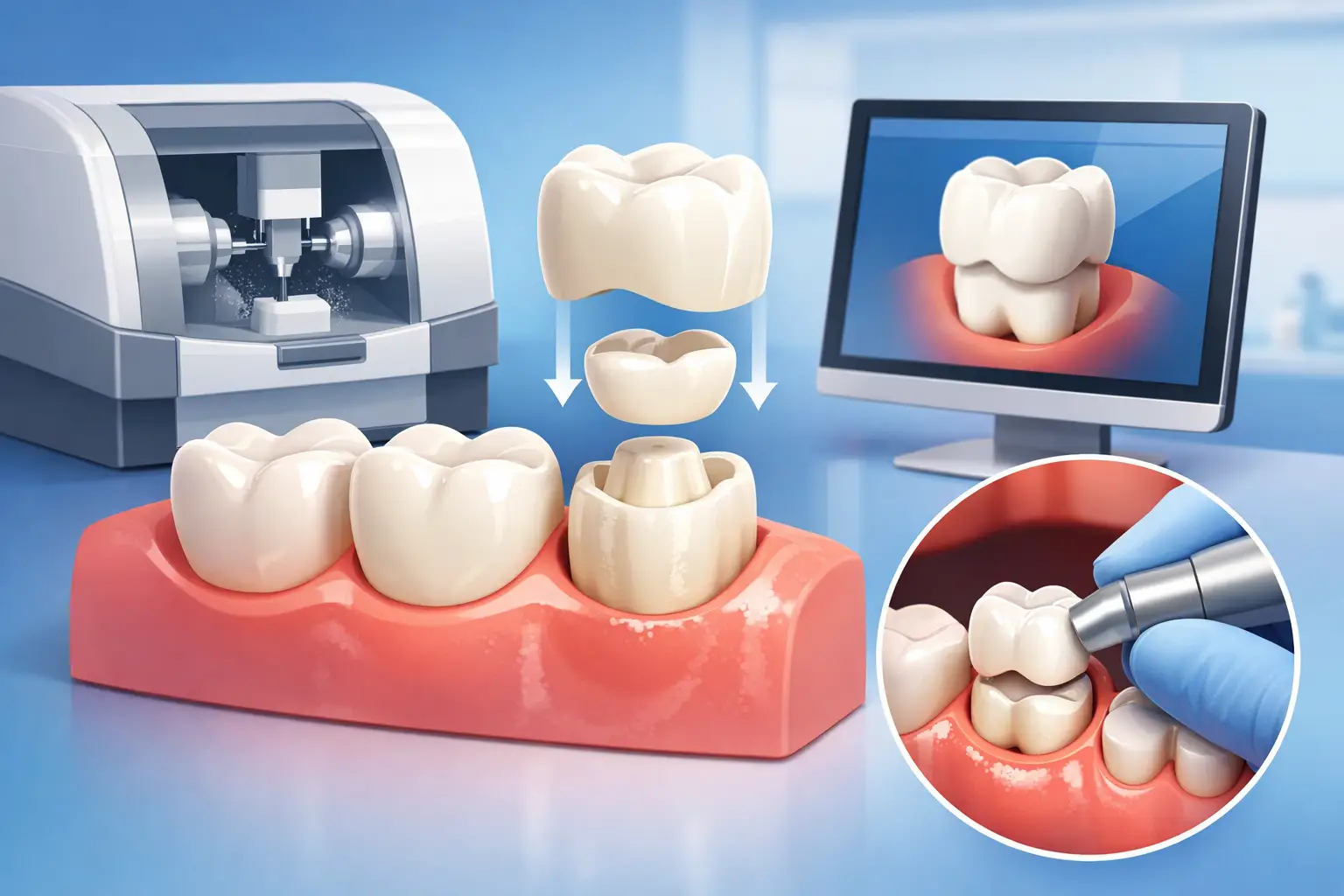

A cracked tooth can make every bite feel uncertain. So can an old filling that keeps breaking down, a tooth weakened after root canal treatment, or a crown that has become loose. When a tooth needs more protection than a filling can provide, same day crowns can offer a practical way to restore its strength, shape, and appearance without the usual wait between appointments.
At Kingsway Family Dentistry, CEREC technology allows many crowns to be designed, created, and placed in a single visit. That can mean less time away from work, school, and family responsibilities, while still receiving carefully planned restorative care.
What Is a Same Day Crown?
A dental crown is a custom covering that fits over a damaged or weakened tooth. It protects the remaining tooth structure and restores the surface used for chewing. Crowns may be recommended when a tooth has a large filling, a fracture, significant decay, severe wear, or has had root canal therapy.
Traditionally, getting a crown involved preparing the tooth, taking an impression, placing a temporary crown, and returning after a dental laboratory made the final restoration. Same day crowns use digital scanning and in-office milling technology to complete much of that process during one appointment.
CEREC crowns are typically made from durable, tooth-colored ceramic. Your dentist selects a shade that works naturally with your smile and designs the crown to fit your bite. The goal is not simply to cover a tooth. It is to help you chew comfortably, protect the tooth from further damage, and maintain a natural-looking smile.
How the CEREC Crown Process Works
Your appointment begins with a thorough examination of the tooth and surrounding tissues. Digital X-rays may be used to assess the root, bone, existing filling, and extent of damage that cannot be seen from the surface. This step matters because a crown is only appropriate when the tooth has a stable foundation to support it.
If a crown is the right treatment, the tooth is gently shaped to create room for the restoration. Local anesthetic is used to keep you comfortable. For patients who feel nervous about dental treatment, nitrous oxide sedation may also be an option, depending on your health history and treatment needs.
Digital scanning replaces traditional impressions
Instead of using conventional impression material, your dentist captures a detailed digital scan of your prepared tooth and the teeth around it. The scan creates a three-dimensional model that helps guide the crown design.
Your dentist then plans the crown’s shape, contacts with neighboring teeth, and bite alignment. This is a careful clinical step. A crown that looks good but feels too high when you bite can cause discomfort, so the fit is checked and adjusted before it is permanently placed.
Your crown is created in the office
Once the design is approved, the CEREC machine mills the crown from a solid ceramic block. While the restoration is being made, you can remain at the office rather than leave with a temporary crown and wait weeks for a laboratory restoration.
After milling, the crown is evaluated for fit, color, and bite. Your dentist bonds it securely to the tooth and makes any final refinements. You leave with your permanent crown in place, along with instructions for caring for it at home.
When a Same Day Crown May Be a Good Choice
Same day crown treatment can be especially helpful for busy adults, parents coordinating family schedules, and anyone who would prefer to avoid a temporary crown. It may also be a welcome option when a tooth breaks unexpectedly and needs prompt protection.
A crown may be considered for a tooth with a large or failing filling, a cracked cusp, extensive decay after the decay has been removed, or a tooth that has become fragile following root canal treatment. In some cases, a worn or discolored tooth may also benefit from a crown when the goal is both functional and cosmetic improvement.
Still, one-visit treatment is not automatically the best option for every tooth. A tooth with active infection may need root canal treatment first. A fracture that extends too far below the gum line may require a different approach. Some complex restorations, certain bite situations, and particular material choices can be better suited to a traditional laboratory-made crown.
The right choice depends on your tooth, your bite, your oral health, and your long-term treatment plan. A clear examination and conversation should come before any decision.
The Benefits of Completing a Crown in One Visit
The obvious benefit is convenience. Completing treatment in a single visit can reduce the need to arrange transportation, time off, childcare, or a second appointment. It also removes the period when a temporary crown may feel loose, come off, or require extra care around sticky foods.
There are clinical advantages as well. Digital scans provide precise information for planning the restoration, and ceramic can closely match the translucency and color of natural enamel. For many patients, the result is a crown that feels comfortable and blends naturally with nearby teeth.
Just as importantly, same day care does not mean rushed care. The technology supports efficiency, but the dentist’s examination, treatment planning, bite assessment, and final adjustments remain essential. A well-made crown should be designed around your mouth, not treated as a one-size-fits-all solution.
What to Expect After Your Appointment
It is common to have mild sensitivity around the treated tooth after a crown is placed, particularly when biting or drinking something very hot or cold. If local anesthetic was used, wait until the numbness has worn off before chewing so you do not accidentally bite your cheek or tongue.
You can usually return to normal eating once the anesthesia is gone, although it is sensible to begin with foods that feel comfortable. Brush twice daily with fluoride toothpaste, clean between your teeth every day, and continue with regular hygiene appointments and examinations. Crowns cannot develop cavities, but the natural tooth at the edge of the crown and the surrounding gums still need consistent care.
Call your dental office if your bite feels uneven, the crown feels loose, you have persistent pain, or sensitivity becomes worse rather than better. Small bite adjustments are sometimes needed, and it is best to address them early.
How Long Do Same Day Crowns Last?
With good home care and regular dental visits, a ceramic crown can serve a tooth for many years. Its lifespan varies based on factors such as the amount of natural tooth remaining, the force of your bite, whether you grind or clench your teeth, and how well plaque is controlled around the crown margins.
If you clench or grind, your dentist may recommend a nightguard to help protect both your crown and your natural teeth. Avoid using your teeth to open packages, cut thread, or bite hard objects. Those habits can chip natural enamel and ceramic alike.
A damaged tooth rarely becomes stronger by waiting. If you have a cracked tooth, a broken filling, discomfort when chewing, or an old crown that no longer feels secure, an examination can clarify what is happening and whether same day crown treatment is appropriate. A timely appointment can help protect your tooth and make getting back to comfortable meals and everyday routines feel manageable again.