
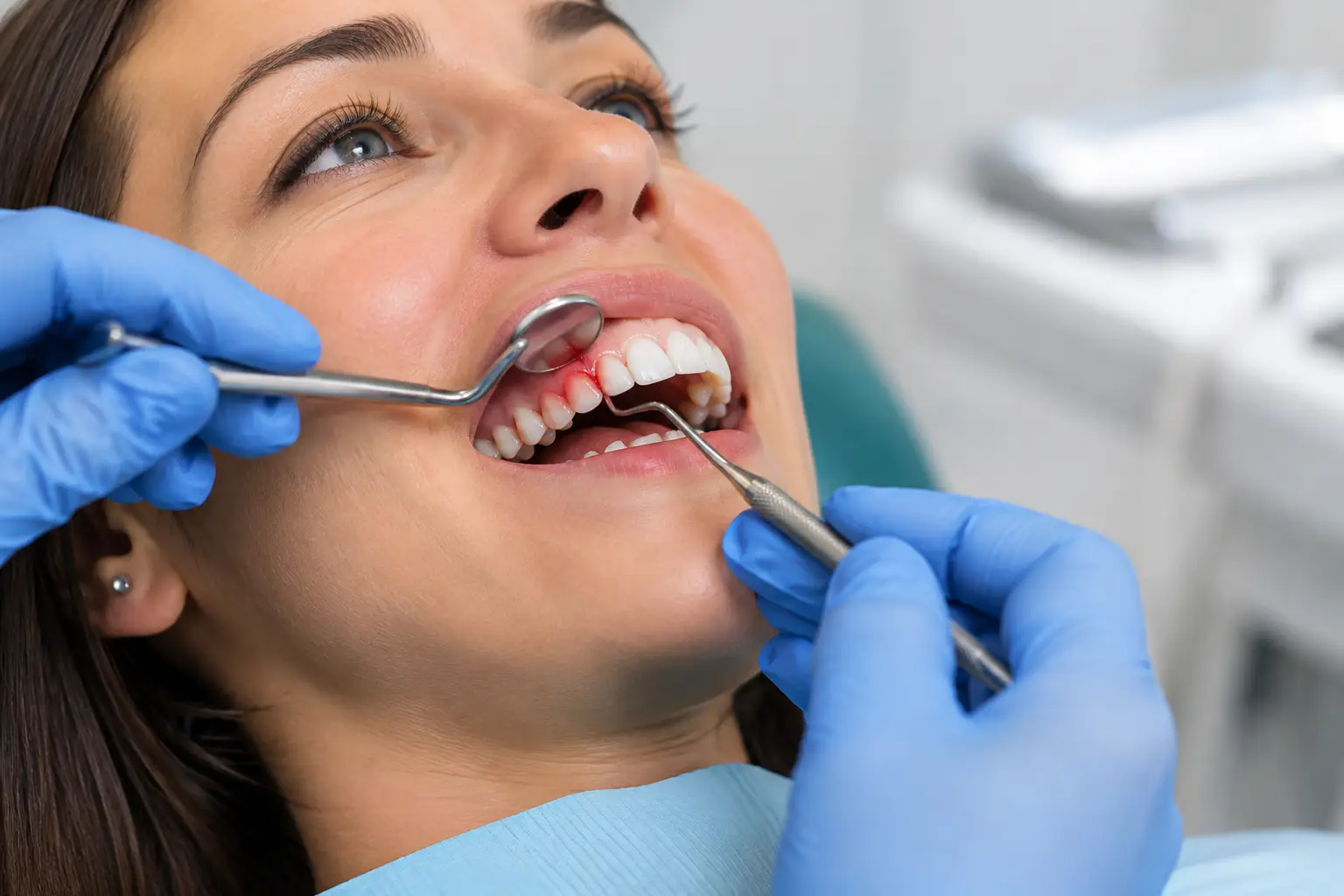

A pink toothbrush after brushing can be unsettling, especially when you are doing what you have been told to do for your teeth. So, why do gums bleed? In many cases, bleeding is an early sign that the gums are irritated by plaque buildup. It is common, but it is not something to ignore or accept as normal.
Healthy gums are generally firm, pink or coral-colored, and do not bleed with gentle brushing or flossing. A small amount of bleeding may have a simple explanation, such as brushing too hard or restarting flossing after a long break. However, persistent bleeding deserves a professional dental evaluation so the cause can be identified and treated before it progresses.
Why do gums bleed when you brush or floss?
The most common reason is gingivitis, the earliest stage of gum disease. Plaque is a sticky film of bacteria that forms on teeth throughout the day. When it remains along the gumline, the bacteria can irritate the gum tissue. Your body responds with inflammation, making the gums tender, swollen, and more likely to bleed.
This does not mean you have failed at oral care. Plaque can collect in difficult-to-reach areas, around crowded teeth, near older dental work, and below the gumline. Even people who brush regularly may miss certain spots without realizing it.
Flossing can also trigger bleeding when you first begin doing it consistently. If the gums are already inflamed, cleaning between the teeth may cause them to bleed initially. Stopping flossing because of bleeding allows plaque to remain there, which often makes the inflammation worse. Gentle daily flossing, paired with proper brushing, often improves mild gum inflammation over time.
It is different if flossing causes sharp pain, the bleeding is heavy, or the gums do not improve after a week or two of careful home care. Those are good reasons to schedule an examination.
Common causes of bleeding gums
Gingivitis is a frequent cause, but it is not the only possibility. Understanding the context can help you know what should happen next.
Brushing too aggressively
A hard-bristled toothbrush or forceful scrubbing can irritate the gums and wear away enamel near the gumline. Brushing harder does not remove plaque more effectively. A soft-bristled brush and gentle, small circular motions are usually the better approach.
Tartar buildup and periodontal disease
If plaque is not removed, it can harden into tartar, also called calculus. Tartar cannot be removed by brushing and flossing at home. It creates a rough surface where more plaque can gather and may extend below the gumline.
Over time, untreated gingivitis can develop into periodontal disease. This more advanced form of gum disease can affect the bone and tissues that support the teeth. Signs may include ongoing bleeding, gum recession, persistent bad breath, changes in how teeth fit together, loose teeth, or pus around the gums. Periodontal disease requires professional care and a treatment plan tailored to its severity.
Hormonal changes
Pregnancy, puberty, menstruation, and menopause can make gum tissue more sensitive to plaque because of hormonal changes. Bleeding during these times is still worth mentioning at a hygiene appointment. Consistent preventive care can help protect gum health during periods of increased sensitivity.
Medications and health conditions
Some medications, including blood thinners, can make bleeding more noticeable. Certain medical conditions, nutritional deficiencies, and immune system concerns may also affect gum health or the body’s response to inflammation.
Do not stop a prescribed medication because your gums bleed. Instead, tell your dentist about all medications and supplements you take, as well as any recent changes in your health. A comprehensive examination can help determine whether the bleeding appears related to plaque, gum disease, a medication, or another concern that should be discussed with your physician.
Dry mouth, smoking, and lifestyle factors
Saliva helps rinse away food particles and supports a healthy oral environment. Dry mouth, whether caused by medications, dehydration, or other factors, can increase the risk of plaque buildup and decay. Tobacco use also raises the risk of gum disease and can sometimes mask bleeding by reducing blood flow to the gums. That can make gum disease harder to notice early.
What to do if your gums are bleeding
Start with gentle, consistent daily care. Brush twice each day for two minutes using a soft-bristled toothbrush and fluoride toothpaste. Aim the bristles toward the gumline without pressing hard. Clean between your teeth once a day with floss or another interdental cleaner recommended by your dental team.
Give mild irritation a little time to settle, but be consistent. It may take several days of careful cleaning before inflamed gums begin to look and feel better. Rinsing with water after meals and drinking enough water can also help reduce lingering food debris.
Avoid trying to solve the problem by brushing less, skipping flossing, or using harsh products. Those steps may leave more plaque behind or further irritate sensitive tissue. If you are unsure whether your technique is effective, a hygiene appointment is an excellent time to ask for a personalized demonstration.
When bleeding gums need a dental appointment
A dental visit is the right next step if bleeding continues for more than one to two weeks, happens often, or occurs without brushing or flossing. You should also call sooner if you notice swollen gums, pain, bad breath that does not improve, gum recession, loose teeth, or changes in your bite.
During an examination, your dentist and hygienist can assess the gums, measure areas around the teeth when needed, and look for plaque and tartar buildup. Digital X-rays may be recommended when there is concern about bone support, infection, or issues that cannot be seen during a visual exam. This information helps create a clear treatment plan rather than relying on guesswork.
For gingivitis, a professional cleaning and improved daily plaque removal may be all that is needed. If periodontal disease is present, treatment may involve deeper cleaning below the gumline and follow-up maintenance visits to keep the condition under control. The goal is to reduce inflammation, protect the supporting structures of the teeth, and help you keep your natural smile for as long as possible.
Can bleeding gums be prevented?
In many cases, yes. Regular preventive visits make it easier to remove tartar before it contributes to more serious gum problems. They also give your dental team the chance to spot changes that may be difficult to see at home.
At home, consistency matters more than intensity. Use a soft brush, clean between teeth daily, and replace your toothbrush or brush head when the bristles become worn. If you have braces, dental implants, bridges, crowns, or dentures, ask which cleaning tools are best for your specific situation. Different restorations and orthodontic appliances can create areas where plaque collects more easily.
Children can have bleeding gums too, particularly when brushing is rushed or new teeth are coming in. Parents can help by supervising brushing, encouraging gentle flossing where teeth touch, and bringing up any bleeding at routine visits. A calm, early conversation can make dental care feel manageable rather than intimidating.
Bleeding gums are your mouth’s way of asking for attention, not a reason for embarrassment. With gentle home care and timely professional support, many causes can be addressed comfortably before they become more complex. If you have noticed blood in the sink or on your toothbrush more than once, making an appointment is a practical next step toward healthier gums and a more confident smile.