
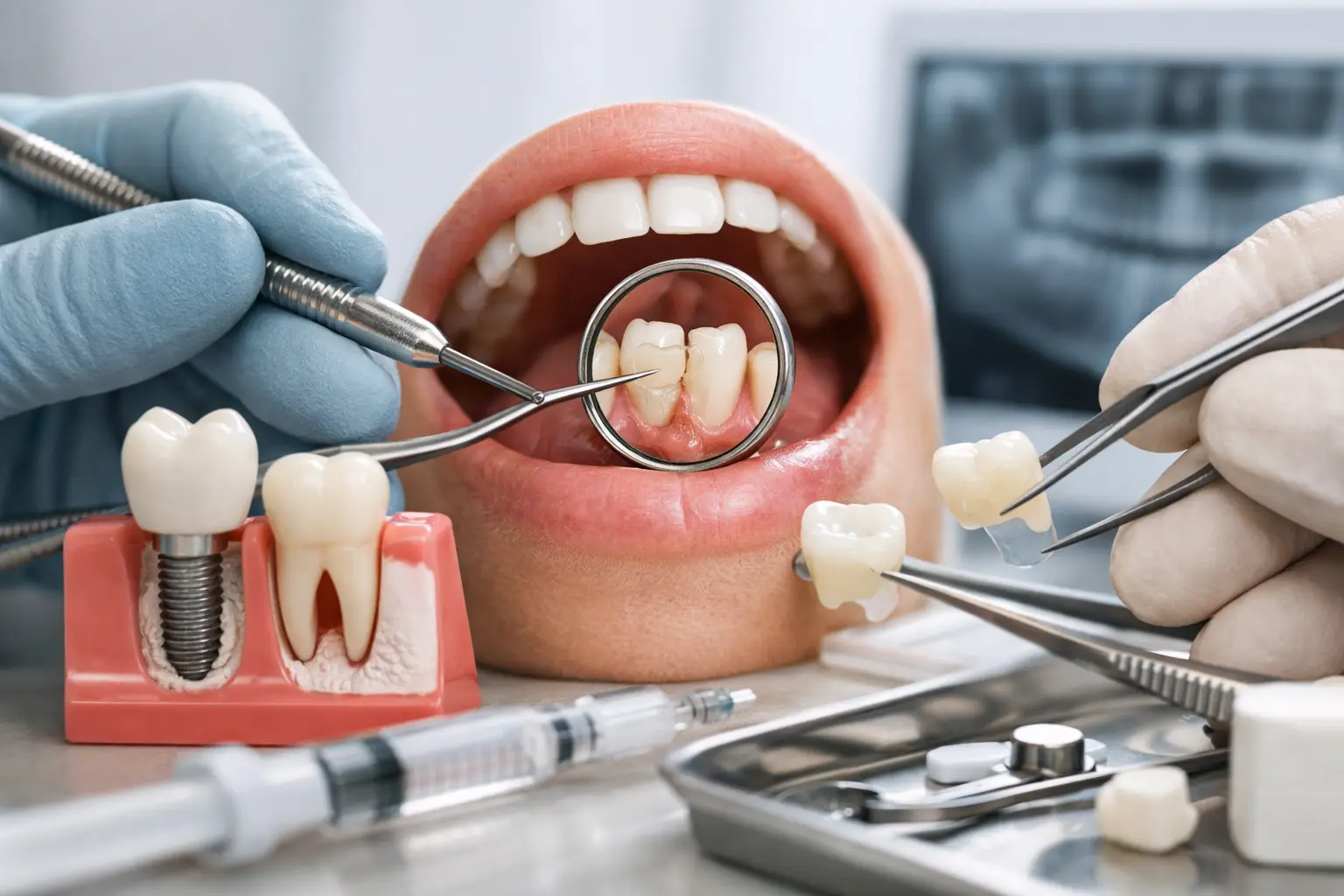

A tooth can fracture while biting down on an unpopped popcorn kernel, during a sports injury, or because an older filling has left part of the tooth unsupported. Tooth fracture treatment is not one-size-fits-all. A small chip may need a simple repair, while a deep crack can require prompt care to protect the tooth from infection, pain, and further damage.
If you have broken a tooth, the most helpful first step is to call a dental office as soon as you can. Early care often gives your dentist more options to preserve your natural tooth and restore a comfortable bite.
What to Do When a Tooth Breaks
Rinse your mouth gently with warm water to clear away debris. If you can find the broken piece of tooth, place it in a clean container with milk or saliva and bring it to your appointment. While a fragment cannot always be reattached, it can help the dentist understand the shape and extent of the break.
Use clean gauze with gentle pressure if there is bleeding from the lip, cheek, or gum. A cold compress against the outside of your face may reduce swelling and discomfort. Until you are seen, avoid chewing on the affected side and choose soft foods. Very hot, cold, sweet, or acidic foods may trigger sensitivity if the inner layers of the tooth are exposed.
Do not try to smooth a sharp edge with a file or use household glue to put a piece back in place. Temporary dental material from a pharmacy may cover a rough edge for a short time, but it is not a substitute for an examination. If you have significant facial swelling, trouble breathing or swallowing, uncontrolled bleeding, or a serious injury to the jaw, seek urgent medical care.
Why an Examination Matters
Not every fracture is visible in a mirror. A crack can begin near a filling or under the gumline and cause pain only when you release your bite. Some people notice a sharp twinge when chewing; others have lingering sensitivity to cold. These symptoms deserve attention even if the tooth looks normal.
A comprehensive examination may include digital X-rays, bite testing, and a close look at the tooth and surrounding gums. Your dentist will assess how deep the damage goes, whether the nerve inside the tooth may be affected, and whether the crack extends into the root. This information guides treatment planning and helps avoid repairing a tooth in a way that will not last.
The timing matters. A superficial chip is usually less urgent than a fractured tooth with severe pain, a loose piece, or exposed inner tooth structure. Still, even a painless crack can spread when you chew. Booking promptly can reduce the chance that a repair becomes a more involved procedure.
Tooth Fracture Treatment Depends on the Type of Damage
Small chips and worn edges
A minor chip in enamel may be smoothed and polished if it does not affect your bite or appearance. When a little more structure is missing, composite bonding can rebuild the edge with a tooth-colored material. Bonding is conservative and often completed in one visit, although it may chip or stain over time and can need touch-ups.
For a front tooth with a larger visible chip, a veneer may be considered in select cases. Veneers can create a natural-looking result, but they are not always the best first choice for a tooth with an active crack or significant structural weakness. The tooth needs to be stable before cosmetic improvements are planned.
Cracks that weaken the tooth
A cracked tooth can remain intact yet flex every time you bite. In this situation, a crown is often recommended to hold the tooth together and reduce the risk of the crack worsening. The crown covers the visible portion of the tooth and is designed to restore strength and function.
For patients balancing work, school, and family schedules, same-day crown technology may make treatment more convenient when appropriate. A crown is not simply a cover placed over a problem tooth. Your dentist first removes compromised structure, checks the fit and bite carefully, and determines whether the remaining tooth can be predictably restored.
Fractures that reach the nerve
Inside each tooth is soft tissue called the pulp, which contains nerves and blood vessels. When a fracture reaches this area, the tooth may become very sensitive, develop spontaneous pain, or become infected. Root canal therapy removes damaged or infected pulp, cleans the inside of the tooth, and seals it so the tooth can be restored.
After root canal treatment, a crown is commonly needed on back teeth because they can become more brittle and absorb heavy chewing forces. The goal is to keep the natural tooth functional for as long as possible, not merely to stop the immediate pain.
Breaks below the gumline or into the root
Some fractures are too deep to restore predictably. A vertical root fracture, for example, may allow bacteria to enter around the root and can lead to recurrent infection. In other cases, the break extends below the gumline, leaving too little healthy tooth structure for a stable crown.
When a tooth cannot be saved, extraction may be the healthiest option. Your dentist can explain replacement choices such as a bridge, dental implant, or removable partial denture. The right choice depends on the location of the missing tooth, the condition of neighboring teeth and bone, your bite, overall health, timeline, and budget.
Managing Pain While You Wait
A fractured tooth can be uncomfortable, but chewing through the pain can make damage worse. Eat soft foods such as yogurt, eggs, pasta, or soup that is not too hot. Try to keep food away from the injured tooth, and avoid hard candy, nuts, ice, crusty bread, and sticky foods that can pull on a loose restoration.
Over-the-counter pain medicine may help when taken as directed on the label, if it is safe for you based on your health history and other medications. Do not place aspirin or other medication directly against the gum or tooth. It can irritate the tissue and does not treat the cause of the pain.
If an edge is cutting your tongue or cheek, dental wax can provide a temporary barrier. Persistent throbbing, swelling, fever, a bad taste, or increasing pain should be treated as a reason to contact the dental office promptly.
Can a Fractured Tooth Heal on Its Own?
Unlike bone, tooth enamel does not heal itself. A very shallow craze line may not require treatment if it is only a surface change and does not weaken the tooth. A true crack, chip, or fracture will not fuse back together, however. It can remain stable for a time or spread under normal biting pressure.
That is why monitoring is sometimes appropriate, but only after a dentist has determined that the tooth is stable. If a crack is causing symptoms or has weakened the tooth, treatment is generally recommended to prevent a larger break. Waiting can turn a repairable problem into one that requires root canal therapy or extraction.
Reducing the Risk of Another Fracture
Teeth often fracture because force is concentrated in one area. Grinding or clenching, chewing ice, using teeth to open packages, and biting hard foods can all raise the risk. Large, aging fillings can also leave the remaining tooth walls vulnerable.
A custom night guard may help protect teeth if you clench or grind during sleep. Regular examinations allow your dentist to monitor worn fillings, small cracks, and bite changes before they become painful. For children and adults who play contact sports, a properly fitted mouthguard is a practical layer of protection.
A broken tooth can feel alarming, especially when pain or an unfamiliar sharp edge makes everyday eating difficult. With a timely examination and a clear treatment plan, most fractures can be managed with comfort, function, and the long-term health of your smile in mind.