

A missing tooth can affect more than the appearance of your smile. It can change how comfortably you chew, make certain foods harder to enjoy, and allow nearby teeth to shift over time. For people considering dental implants Beamsville treatment, the first question is usually simple: can an implant give me a secure, natural-feeling replacement tooth? For many patients, the answer is yes, but a careful examination is the right place to begin.
An implant is not a one-size-fits-all solution, and it does not need to be rushed. Your dentist can review your oral health, discuss your goals, and explain whether an implant, bridge, or denture best suits your needs, timeline, and budget.
Dental Implants in Beamsville: What They Replace
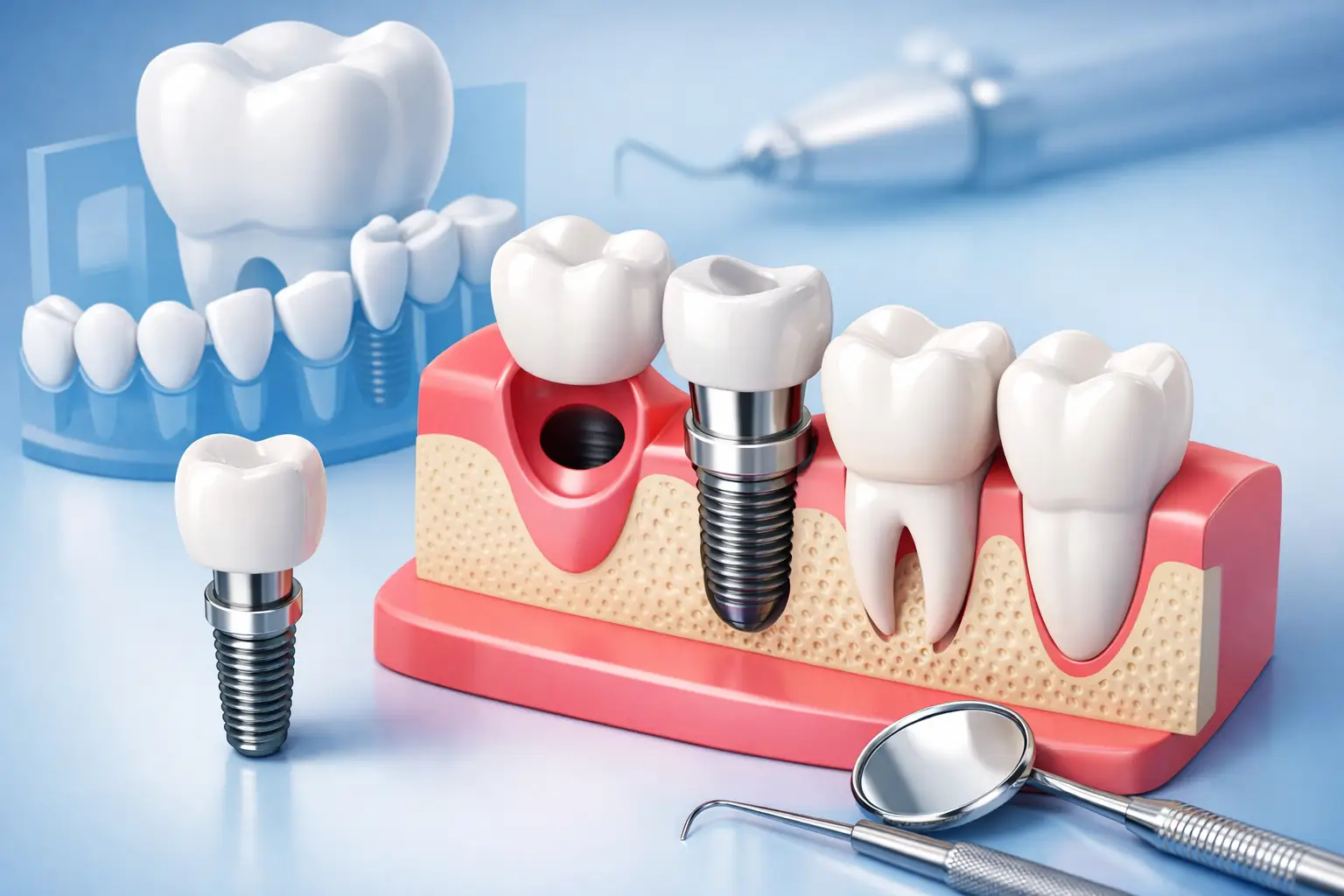
A dental implant replaces the root of a missing tooth. It is a small post, typically made from titanium, that is placed in the jawbone. Once the area has healed and the implant has integrated with the bone, a custom restoration is attached on top. That restoration may be a crown for one missing tooth, a bridge for several missing teeth, or a support system for a denture.
The visible crown is designed to blend with your surrounding teeth in shape and color. More importantly, the implant provides stable support beneath it. Unlike a traditional bridge, an implant generally does not require the neighboring teeth to be prepared for crowns. Unlike a removable denture, it is fixed in place and does not need to be taken out at night.
That does not mean implants are automatically the best choice in every situation. A bridge may be a practical option when neighboring teeth already need crowns. A well-designed removable denture can be appropriate when several teeth are missing or when surgery is not preferred. The goal is not to steer every patient toward the same treatment. It is to restore comfort, function, and long-term oral health with a plan that makes sense for you.
Who May Be a Good Candidate?
Many healthy adults can be candidates for implant treatment, including people who have lived with a missing tooth for years. Healthy gums and adequate jawbone are important because the implant needs a stable foundation. During a comprehensive exam, your dentist may use digital X-rays and other imaging to assess the bone, nearby teeth, bite, and location of important structures such as nerves and sinuses.
Gum disease, active decay, or an untreated infection should be addressed before implant placement. This is not a setback. It helps create a healthier environment for healing and protects the investment you are making in your smile.
Bone loss can sometimes occur after a tooth has been missing for a long time. In some cases, bone grafting may be recommended before or at the time of implant placement. This can add time to the treatment process, but it may improve the stability and predictability of the final result. Smoking, uncontrolled diabetes, certain medications, teeth grinding, and medical conditions that affect healing are also important parts of the conversation. Your dentist will review your health history carefully and coordinate with your physician when appropriate.
What the Implant Process Usually Looks Like
Implant treatment is planned in stages, with the timeline based on your individual healing needs. After your consultation and diagnostic imaging, the first clinical step is implant placement. The procedure is performed with local anesthetic, and comfort options can be discussed if dental anxiety has made treatment difficult in the past. Nitrous oxide sedation may help eligible patients feel more relaxed during care.
After placement, the implant needs time to heal and bond with the jawbone. This process, called osseointegration, often takes several months. Depending on the tooth location, bone quality, and treatment plan, a temporary tooth may be possible while you heal. Your dentist will explain what is realistic for your case rather than promising a timetable that does not account for biology.
Once the implant is ready, an abutment is placed to connect the implant to the final restoration. Impressions or digital scans are then used to create the crown, bridge, or denture. The final tooth is checked for fit, appearance, and bite so it feels comfortable when you speak and chew.
A same-day crown can be an excellent solution for some natural teeth, but implant crowns often follow a different timeline because the implant must heal first. Clear expectations matter. A treatment plan should outline the stages, anticipated appointments, healing periods, and any procedures that may be needed before the final restoration.
The Benefits Patients Notice
The most immediate benefit is often confidence. A secure replacement tooth can make it easier to smile, talk, and eat without worrying about a gap or a loose appliance. Implant-supported teeth are designed to feel stable, and they can restore chewing ability more effectively than many removable options.
There are oral health benefits as well. When a tooth is missing, the jawbone in that area may gradually lose stimulation. Because an implant functions like a tooth root, it can help support the bone in the area. It also helps maintain spacing by filling the gap, reducing the chance that adjacent teeth will drift.
Patients should still have realistic expectations. An implant is a highly effective tooth-replacement option, but it is not a natural tooth that can be ignored. It needs consistent home care and professional monitoring. The crown on top can also experience normal wear over time, especially for patients who clench or grind their teeth.
Caring for an Implant Long Term
Daily care is straightforward: brush thoroughly twice a day, clean between teeth and around the implant with the tools recommended by your dental team, and keep regular hygiene appointments. Your hygienist can show you how to clean effectively around an implant crown, bridge, or implant-supported denture without damaging the tissues.
Routine examinations are just as important after implant treatment as they were before it. Your dentist will check the surrounding gums, bite, restoration, and supporting bone. Catching inflammation, a loose component, or bite-related wear early can help avoid more complex repairs later.
If you grind your teeth, a night guard may be recommended to protect both your natural teeth and your implant restoration. If you notice bleeding gums, swelling, discomfort when biting, or a change in how the implant tooth feels, schedule an appointment rather than waiting for the issue to worsen.
Questions About Cost and Treatment Planning
The cost of dental implants varies because treatment is customized. A single straightforward implant involves different planning and materials than an implant-supported bridge or denture. Extractions, bone grafting, temporary teeth, sedation, and the type of final restoration can also affect the total investment.
At Kingsway Family Dentistry, treatment planning begins with understanding the condition of your mouth and what matters to you. Some patients want the most fixed, long-term option available. Others need to phase treatment over time or compare an implant with a bridge or denture. A transparent conversation about choices, expected costs, and timing can make the decision feel far more manageable.
If a missing tooth is affecting how you eat, speak, or feel about your smile, you do not have to decide on treatment before asking questions. A consultation can give you a clear picture of your options and a calm, practical path toward feeling comfortable with your smile again.
Book your next appointment today at Kingsway Family Dentistry in Beamsville. Call (905) 563-4001 to schedule a check-up and take a step towards better health.
24*7 Online Dental appointment available now. Schedule your online booking.