
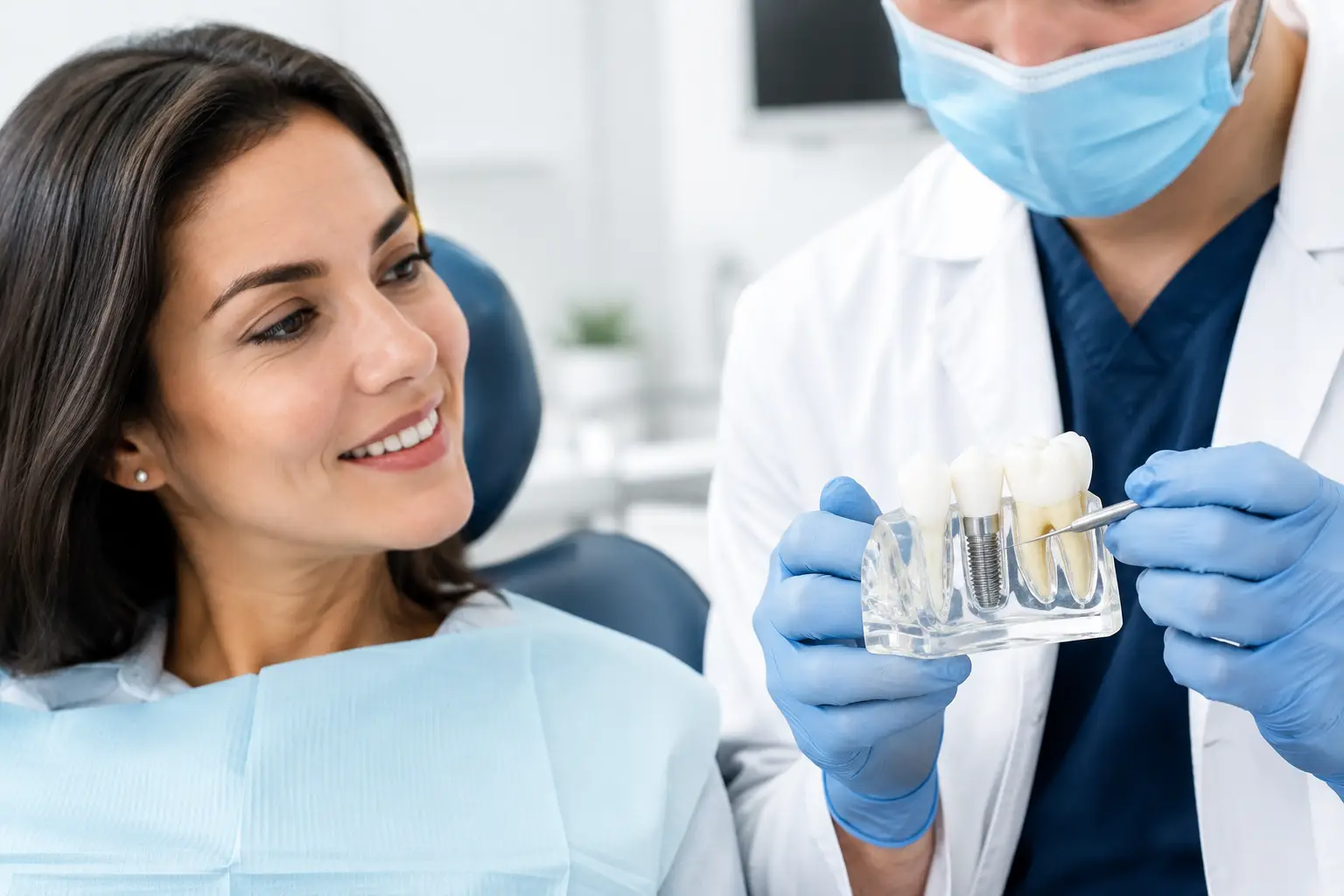

A dental implant is designed to feel like a long-term part of your smile, but it gets there through a careful healing process. This dental implant healing timeline guide explains what typically happens after implant surgery, what may feel normal, and when it is time to call your dental team. Every patient heals at a different pace, so your personalized treatment plan and follow-up visits should always guide the final timeline.
The Big Picture: Healing Takes Several Months
A dental implant replaces the root of a missing tooth with a small titanium post placed in the jawbone. The most important part of recovery is osseointegration, the process in which your bone gradually grows around and secures the implant. This cannot be rushed simply because the surgical site feels better after a few days.
For many patients, the gum tissue settles within one to two weeks, while the implant itself may need three to six months to integrate with the bone. In some cases, an implant can be restored sooner. In others, especially when bone grafting, a sinus lift, or a more complex extraction was needed, additional healing time supports a stronger result.
The final visible tooth is usually a custom crown. Once your dentist confirms that the implant is stable and the surrounding tissues are healthy, an abutment and crown can be placed to restore chewing function and the appearance of your smile.
Dental Implant Healing Timeline: What to Expect
The first 24 to 72 hours
It is common to have mild bleeding or oozing, tenderness, swelling, and minor bruising after surgery. These symptoms are usually most noticeable during the first two or three days. Your dentist may recommend gauze for early bleeding, cold packs against the outside of the face, and prescribed or over-the-counter pain relief that is appropriate for you.
Rest matters during this stage. Avoid strenuous exercise, heavy lifting, smoking, alcohol, and drinking through a straw unless your dentist has told you otherwise. These activities can interfere with clotting and irritate the surgical area. Choose cool or lukewarm soft foods, such as yogurt, scrambled eggs, soup that is not hot, smoothies eaten with a spoon, or mashed vegetables.
Do not probe the site with your tongue or fingers. It can be tempting to check it repeatedly, especially if stitches are present, but leaving the area undisturbed gives the tissue a better chance to heal.
Days 4 through 7
Swelling should begin to improve, although a small amount of soreness can remain. Many patients are comfortable returning to routine work and family activities within a day or two, but that depends on the extent of surgery and the nature of the job. A physically demanding role may require more downtime.
Continue eating softer foods and chew on the opposite side when possible. Gentle oral hygiene is essential. You may be instructed to use a warm saltwater rinse after the first day, brush the rest of your mouth as usual, and clean near the implant site carefully with a soft toothbrush. Follow the specific instructions you received, particularly if you had a bone graft or sutures.
A little tenderness is expected. Pain that suddenly becomes worse after initially improving is not something to ignore. Contact your dental office for guidance rather than trying to manage a change in symptoms on your own.
Weeks 2 through 4
By this point, the gums often look and feel substantially better. If non-dissolving sutures were used, they may be removed at a follow-up appointment. Your dentist will check the healing tissue, review home care, and make sure there are no signs of infection or excessive pressure on the implant.
You may be able to broaden your diet, but avoid biting hard foods directly on the implant area until your dentist says it is safe. Nuts, hard candy, crusty bread, ice, and sticky foods can put unnecessary force on a healing implant. If you wear a temporary denture or temporary tooth replacement, it may need adjustments so it does not press on the surgical site.
Months 1 through 3
This is often the quiet phase of healing. You may feel normal and have little awareness of the implant, yet important changes are happening beneath the gums. The jawbone continues to bond with the implant, building the stability needed for a lasting restoration.
Regular checkups are useful because comfort alone does not confirm full integration. Your dentist may use an examination and digital imaging to evaluate the area and decide whether healing is progressing as planned. Good brushing, daily cleaning between teeth, and avoiding tobacco products all support healthier gums and bone during this period.
Months 3 through 6 and crown placement
When the implant has integrated successfully, your dentist can begin the final restoration process. Some patients need a small procedure to uncover the implant and place a healing cap before the final abutment and crown are made. Others may already have an accessible implant component in place.
The crown is designed to match the shape, shade, and bite of your surrounding teeth. It should look natural, but it also needs to function comfortably when you chew. Your dentist may make small adjustments to ensure your bite does not place excessive force on the new implant.
Once the crown is attached, you can generally return to eating a normal, balanced diet. That does not mean an implant is indestructible. Like natural teeth, it benefits from sensible habits and protection from repeated grinding or clenching. A night guard may be recommended for patients who grind their teeth during sleep.
What Can Change Your Implant Healing Time?
The timeline is not identical for everyone. A straightforward implant placed in healthy bone often heals more predictably than an implant placed after infection, significant bone loss, or a recent extraction. If a bone graft was needed, the graft itself may need time to mature before implant placement or before final restoration.
Your overall health also matters. Diabetes that is not well controlled, active gum disease, immune conditions, certain medications, smoking, and poor oral hygiene can slow healing or increase the risk of complications. This does not automatically mean implants are not an option. It means careful planning, honest health history, and consistent follow-up become even more important.
Location can make a difference as well. Back teeth absorb stronger chewing forces, while an implant in the smile zone may require added attention to gum shape and appearance. Your dentist will balance healing time, comfort, function, and esthetic goals when recommending the right sequence for your care.
Signs You Should Call Your Dental Team
Some swelling and discomfort are expected after surgery. However, call promptly if you have persistent or worsening pain, swelling that increases after several days, fever, pus, a foul taste or odor, uncontrolled bleeding, numbness that does not improve, or an implant that feels loose.
Do not wait for a scheduled follow-up if something feels wrong. Early attention can protect the healing site and provide reassurance when a symptom turns out to be part of normal recovery. If you have severe swelling that affects breathing or swallowing, seek emergency medical care immediately.
Caring for Your Implant for the Long Term
An implant cannot get a cavity, but the gums and bone around it still need daily care. Brush twice a day with a soft toothbrush, clean between teeth every day using the tools recommended by your dental team, and keep up with professional hygiene visits and examinations. These appointments allow your dentist to monitor your bite, crown, gums, and bone levels over time.
For families balancing work, school, and busy schedules, planning follow-up visits before leaving the office can make the process easier. Implant treatment is a series of carefully timed steps, not a single appointment, and consistent care helps protect the investment you have made in your smile.
A successful implant recovery is usually steady rather than dramatic: less swelling, more comfort, healthy-looking gums, and regular confirmation that the implant is integrating as it should. If you are considering an implant or have questions about your own healing, a conversation with your dental team can turn an uncertain timeline into a clear, manageable plan.