
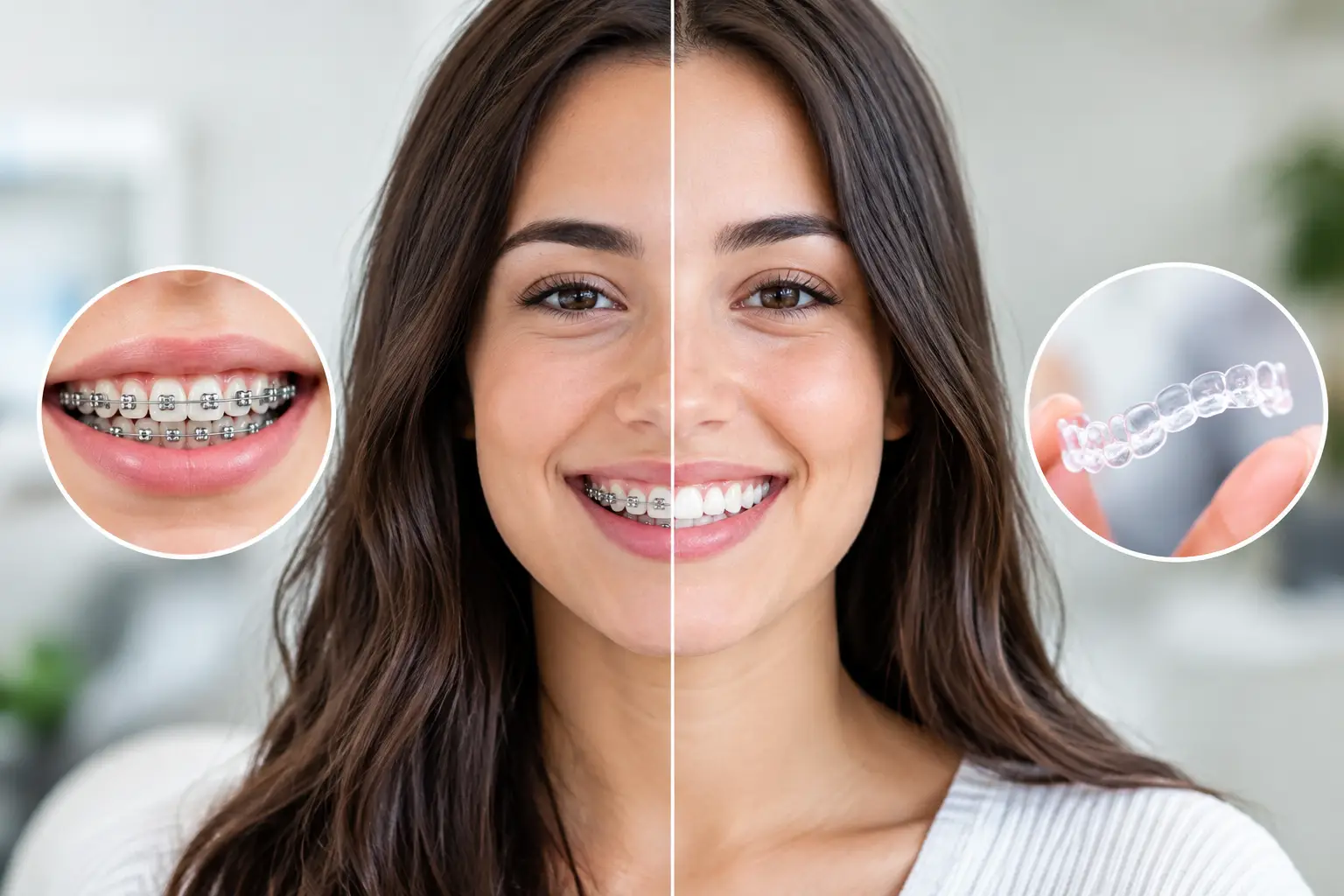

A wedding photo, a job interview, or simply seeing your smile in the mirror can make orthodontic treatment feel more urgent. When considering braces versus clear aligners, the right choice is not just about which option looks better. It is about the movements your teeth need, how treatment fits your routine, and which approach will help protect your oral health for the long term.
Both braces and clear aligners can create healthy, confident smiles for teens and adults. The best option starts with a comprehensive examination, digital imaging, and a conversation about your goals. Some cases can be treated successfully with either approach. Others respond more predictably to one method.
How Braces Move Teeth
Traditional braces use brackets bonded to the teeth and a wire that is adjusted over time. Small elastic ties or specialized components may be added when needed. Because braces remain in place around the clock, they apply steady pressure without relying on the patient to remember to wear them.
This fixed approach can make braces especially effective for more complex concerns. Significant crowding, large gaps, teeth that need to be rotated or moved vertically, and bite problems may require the control braces provide. Braces can also be a practical choice for younger patients who may find it difficult to keep track of removable aligners.
Today’s braces are smaller and more comfortable than many people remember. You may feel pressure for a few days after an adjustment, but that sensation typically settles as your mouth adapts. Regular visits allow your dental team to monitor progress, make adjustments, and address any concerns early.
How Clear Aligners Work
Clear aligners are custom-made, removable trays that fit closely over the teeth. Each set is designed to make small, planned changes before you move on to the next set. They are nearly invisible from a conversational distance, which is why many adults and older teens appreciate them.
For aligners to work as planned, they generally need to be worn about 20 to 22 hours a day. They come out for meals, brushing, flossing, and drinking anything other than water. That flexibility is a real advantage, but it also places more responsibility on the patient. Leaving aligners out for long stretches, misplacing them, or switching trays later than instructed can slow treatment and affect the final result.
Attachments may be placed on some teeth to help aligners grip and guide more precise movements. These tooth-colored shapes are usually subtle, but they are worth discussing before treatment begins. Some patients may also need small spaces created between teeth or temporary elastics to improve bite correction.
Braces Versus Clear Aligners: The Day-to-Day Difference
Appearance is often the first difference people notice. Clear aligners are discreet and removable, while braces are visible on the teeth. For a working professional, someone preparing for a special event, or a teen who feels self-conscious about brackets, aligners may feel easier to live with.
Eating is different with each option. With braces, hard, sticky, and very crunchy foods can damage brackets or wires. Patients usually need to avoid items such as popcorn, hard candies, chewing gum, and biting directly into whole apples or corn on the cob. With aligners, you can eat the foods you enjoy once the trays are removed, then brush your teeth before putting them back in.
Oral hygiene also requires a different routine. Braces create more places for plaque and food debris to collect, so careful brushing around brackets and daily cleaning between teeth are essential. Aligners make brushing and flossing more familiar because they are removed first. However, teeth should be clean before the trays go back in. Otherwise, food particles and sugars can remain against the enamel for hours.
Comfort varies from person to person. Braces can initially rub against the cheeks or lips, and a wire may occasionally need attention. Aligners have smooth edges for most patients, although a new tray can create temporary pressure or irritate a small area. In either case, persistent discomfort should be checked rather than ignored.
Which Treatment Handles More Complex Problems?
Neither braces nor aligners are automatically better. The question is whether the appliance can deliver the specific tooth and bite movements your treatment plan requires.
Braces are often recommended when a case involves severe crowding, impacted teeth, substantial bite discrepancies, or movements that need a high degree of control. Since they are fixed in place, braces do not depend on daily wear habits. This can provide a more predictable path for certain patients.
Clear aligners can treat many mild to moderate alignment and bite concerns, and they can be appropriate for some complex cases as well. Advances in planning software, attachments, and treatment techniques have expanded what aligners can do. Still, not every smile is an ideal aligner case. A careful evaluation helps avoid choosing a treatment based solely on appearance.
Age matters less than commitment and clinical need. Adults can be excellent candidates for braces, and responsible teens can succeed with aligners. For children whose jaws and permanent teeth are still developing, braces or other early orthodontic appliances may be more appropriate. An orthodontic assessment can identify whether treatment should begin now or be monitored until the timing is right.
Cost, Timing, and Follow-Up Visits
The cost of braces and clear aligners can overlap, but fees depend on the complexity of treatment, the expected length of care, the type of appliance, and any additional services required. Insurance coverage also differs by plan. A written treatment plan should explain what is included, expected payment options, and how retainers will be handled once active treatment is complete.
Treatment time varies widely. Some patients finish in several months, while others need 18 months or longer. Braces may be more efficient for certain complex corrections. Aligners can stay on schedule when they are worn consistently, but missed wear time can add weeks or months. During your consultation, ask what could affect the timeline in your specific case.
Both options require follow-up appointments. Braces need periodic adjustments, while aligner visits confirm that teeth are tracking properly and provide the next stages of treatment. These appointments are not just checkpoints for a straighter smile. They also give your dental team a chance to monitor gum health, enamel, bite function, and any areas that need extra attention.
Retainers Protect the Result
Orthodontic treatment does not end the day braces come off or the final aligner is completed. Teeth naturally have a tendency to shift, especially during the first months after treatment. Retainers hold them in their corrected positions while the surrounding tissues adapt.
Some retainers are removable and worn at night after an initial full-time period. Others are bonded behind the front teeth. Your dental team may recommend one type or a combination based on your bite and the risk of relapse. Wearing retainers as directed is one of the simplest ways to protect the time, effort, and investment you have put into your new smile.
Making a Choice That Feels Manageable
A treatment decision should feel informed, not pressured. During an orthodontic consultation, share what matters most to you: a discreet appearance, fewer food restrictions, the ability to remove an appliance, a more hands-off routine, a particular deadline, or concerns about treatment complexity. Your dental team can explain which goals are realistic and why one option may offer a better result.
At Kingsway Family Dentistry, orthodontic planning begins with the whole picture, including the health of your teeth and gums, your bite, and your daily routine. If you have untreated decay, gum inflammation, or a damaged restoration, those concerns may need attention before orthodontic treatment begins.
The best choice is the one that can safely achieve your treatment goals and that you can follow consistently. A clear conversation and a personalized examination can turn a difficult decision into a practical next step toward a smile that feels like your own.